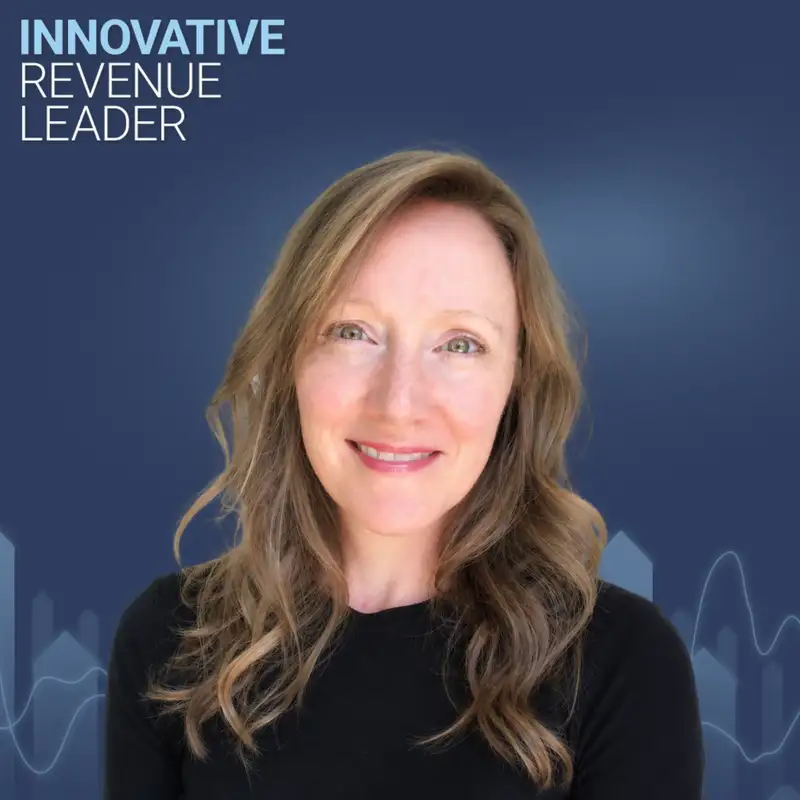
IRL - Heather Rinke
===
Speaker: [00:00:00] Welcome to the Innovative Revenue Leader Podcast. I'm your host, Seth Mars. Join me as we deliver practical insights to help B2B CROs Find new and innovative ways to grow in this fast changing environment. The Innovative Revenue Leader is sponsored by Sandler, a triad company, empowering sales professionals and leaders to master the craft of selling at all levels.
squadcaster-jf2a_5_08-13-2026_090801: Hello, everyone. Welcome back. Today's guest is someone I'm really excited to, to sit down with. She's a Salesforce product leader, strategist, technology consultant, and community advocate. She spent nearly two decades helping organizations transform their sales and marketing operations teams, earning 18 Salesforce certifications along the way while becoming a trusted advisor to growth-focused companies.
She leads product strategy and helps organization maximize the value of Salesforce. Beyond her day, her day job, she's a Salesforce tramp- champion, frequent Dream- Dreamforce [00:01:00] attendee, uh, TEDx and community reference speaker, and is passionate about using technology and strategy to solve complex business challenges.
I've had the first-hand experience, 'cause her and I work for the same company and have worked together on several projects. She's fantastic. Her current position is Salesforce Product Director at Sercante. Heather, welcome.
heather-rinke_1_08-13-2026_090801: Thank you. Great to be here
squadcaster-jf2a_5_08-13-2026_090801: Yeah, great to have you. So I'm gonna jump in with the, the first question, which is a standard one that I ask is like, what's the most innovative thing that you're seeing in B2B right now?
heather-rinke_1_08-13-2026_090801: yeah, you know, everyone's talking about AI, um, and everybody, you know, most organizations will have a tool that has at least, um, some AI functionality in, in their tech stack. Um, but the shift now I'm seeing is now, um, tools are now moving from-- or the, the tech and the AI is now moving from, from being separate and is, and just, uh, an isolated tool that's assistive to being a fundamental and integrated par- part of the overall process, um, and sup- [00:02:00] and shifting towards that, that agility and flexibility. So take, for example, the CRM. Um, it's, it's a core data foundation, um, but we're moving away from, from h- forcing people to be in that CRM and being in that single interface in order to operate, um, and f- and also shifting from forcing them to jump from, from tool to tool in order to do what they have to do.
So instead, we're bringing everything together, right? The data, the systems, and the AI into where they already are and where they're spending their day. So whether that's in the inbox, whether that's in their calendar, in Slack or Teams or call platform, um, it, it's pulling all that together, um, and making it a, a mul- the multi-tool integration more seamless.
squadcaster-jf2a_5_08-13-2026_090801: that's crazy to a certain extent, right? Because the whole world up until 2022 was, "I want you in the CRM. You need to work in the CRM." And what you're talking about here is this [00:03:00] bifurcated world that's just saying, "I'm trying to meet you where your process works best."
heather-rinke_1_08-13-2026_090801: Yeah. Yeah. 'Cause I mean, the CRM's still important. It's still important for, for a lot of, you know, that overall, um, uh, you know, visibility to the process and helping, helping the, um, t- to track the pipeline and to be able to help the seller with that, that part, and y- and s- and sales leadership as well. Um, but it doesn't mean that the seller has to be in the CRM in order to do it.
They can be, they can be still sending that data and, and, um, triggering those processes from where they are,
squadcaster-jf2a_5_08-13-2026_090801: Yeah. So it's
heather-rinke_1_08-13-2026_090801: they can s- they... It takes away that manual, some of that manual friction
squadcaster-jf2a_5_08-13-2026_090801: So it's just kind of happening in the flow. It's almost like you're, you're getting the value of the tool without having to be in the tool. So the mission is still the same, but I'm just giving you different surface areas to be able to work on that are just better for you to work in, like Slack or, or...
Awesome. Awesome. So, like, talking about CRM, [00:04:00] it, over the years, the way that it's been used in companies has kind of given it a, a, it's become a negative for sellers to a lot of people. Like, your-- a recent survey stated that 48% of sales leaders see their CRM as more of a burden than a help. Why do you think this is the case?
And, and, like, how, how do you actually know if your CRM is helping or, or, or hurting your sellers? I know you do a lot of work with customers around this
heather-rinke_1_08-13-2026_090801: Yeah. And we find that, like, I mean, really if you think about the CRM, um, it was designed for y- um, you know, a large part of that was designed for management oversight. So like
squadcaster-jf2a_5_08-13-2026_090801: Yeah
heather-rinke_1_08-13-2026_090801: doing that tracking, that pipeline management, that performance management. But it's, it wasn't necessarily built for active day-to-day selling. n- when you have that, that, that conflict, that friction is inevitable. Um, you know, so from a seller perspective, you know, they have all this administrative overhead trying to get data into that system to support all [00:05:00] that reporting and p- performance management. but you have all this data entry, and in most CRMs there you have like, you know, validations that you're hitting if you don't have the data right.
Um, and, you know, oftentimes sellers will have a workaround, you know, to, to try to like just get what they need and get, push that update through. That can lead to data quality issues and a general lack of, uh, trust in the data. Um, and you also have what I s- what I call, um, almost like a shadow operation.
So that means that you have reps that are maybe using their own, keeping their own notes and their own spreadsheets, uh, or they're having private Slack conversations to manage their deals. And they're all d- doing this because of all that friction. The CRM can be slow or convoluted and, um, uh, and then that becomes a problem because the critical deal context and all of that account information is all in those separate s- [00:06:00] places and trapped in those silos. And then the moment you need to pull all that together, everything slows down or even grinds to a halt. And you have, you know, that, that has a cost to it, right? That,
squadcaster-jf2a_5_08-13-2026_090801: Yeah
heather-rinke_1_08-13-2026_090801: it could cost you the, you know, the momentum of the deal. You lose that momentum, you lose the trust with the customer because maybe you don't know how to h- have all the context.
squadcaster-jf2a_5_08-13-2026_090801: So is it... I mean, it kind of seems like sellers haven't seen the value of doing it, so they've never done it, but then they realize the pain of it. So it's almost like this cycle where because you don't put anything into it, you can't get anything out of it, and you've got this kind of cycle of mistrust that happens that doesn't allow them to get the value of it because they have to contribute to it to, to make that.
Um, is that fair?
heather-rinke_1_08-13-2026_090801: Yeah. And, you know, I mean, especially with customers that have, um, that may have, um, a, um, a CRM for a, for a while, um, they may try to make fixes here and there in order to try to combat the, the, [00:07:00] the, the issue or the symptom, but not the root cause necessarily. And so you're, um, you know, like there could be band-aid fixes that, um, that are applied, but they're never really addressing the cur- like the real problem, whi- which is that friction
squadcaster-jf2a_5_08-13-2026_090801: Yeah. So it's, I mean, let me put a Band-Aid in like trying to force people to work through stages or do different things in ways that create a compliance feel so you kind of get what you want, but it's not... So, but it's fictitious in the way that you get, like, yeah.
heather-rinke_1_08-13-2026_090801: Exactly
squadcaster-jf2a_5_08-13-2026_090801: you work with a lot of customers to try to undo that stuff.
How do you calculate the cost? Like, what the revenue lost of that when you're working with them? Like, how, like, uh, like if you don't get adoption, here's the impact. What do you use to, to talk to that?
heather-rinke_1_08-13-2026_090801: Yeah. So you're thinking about things like, um, you know, I mean, that, the, I mentioned the spreadsheets and, like, some of the things that are happening outside, right? I mean, like, there's, there's a couple ways to look at it. One is, one is, like, let's say, um, you know, like, leads [00:08:00] are being managed in a spreadsheet.
They're not going through the system. They're not being captured in the right way. Um, and so those, those leads, and they could be high intent prospects, right? They, those, if they're being managed in a sheet, they, there's a risk of them slipping through the cracks because maybe they're being skipped over, um, or not being updated accurately, and that can lead to delayed or no follow-ups, and that hurts your conversion rates, right?
Because you're not, you're not building that pipeline based on all those potentially good leads. Um, and then you have all that seller admin work, right? That, that, so the, you know, all the time that they spend on, you know, pulling together reports, digging through emails, prepping for meetings, and, you know, all of that manual administrative work, um, that takes away from their, the, the real selling time, right?
Getting in front of people and building those relationships. And if you take those, all that admin time and, you know, and think about how many, how many sellers you have multiply that admin time by, you know, the, the win rate, the [00:09:00] deal size, that, all that time they could be spending on, on, uh, on, on their pipeline and on their deals, that does represent that, that actual potential revenue or that leaked revenue that could be, um, leaking from your pipeline.
squadcaster-jf2a_5_08-13-2026_090801: So it's interesting you say that. All the things you described are around taking time off the seller, not putting time onto the seller. So it's, it's like this weird dynamic of a seller thinks it's too administratively burdensome. It's not because of the tool, it's because you've configured it in a way to be administratively burdened
heather-rinke_1_08-13-2026_090801: Absolutely. There are a lot of co- um, companies that we work with, like they have so much already invested in their CRM, um, uh, that, you know, sometimes it's just optimizing it that, that
squadcaster-jf2a_5_08-13-2026_090801: Yeah
heather-rinke_1_08-13-2026_090801: is all that's needed in order to make it a truly val- valuable tool
squadcaster-jf2a_5_08-13-2026_090801: one of the things around a CRM is it truly is that consolidation point for the customer because marketing, the, the source of truth for an account, for a contact [00:10:00] is CRM and it, and it definitively is. It will be. So it is really the melding pot of where all this information can be connected to understand what's going on with, with buyers.
So what are the challenges that you see, uh, that, that, um, like if we turn this around and talk about it, if I'm a buyer buying from a company, what are some of the challenges that, that they see because of a lack of use of the CRM?
heather-rinke_1_08-13-2026_090801: yeah, so I mean, like that in, that internal friction almost always, um, uh, will, will translate into some form of external buyer pain. and they, like, but the thing is that buyers don't care about, like the, the,
squadcaster-jf2a_5_08-13-2026_090801: Yeah
heather-rinke_1_08-13-2026_090801: internal process. They don't, they don't care about your, you know, your d- which team's handling what and what your sys- what your handoffs are. Um, they're expecting one continuous journey. Um, and if those handoffs aren't smooth and, um, the knowledge transfer breaks down, um, or, you know, like [00:11:00] the, there isn't enough of the context for like true pers- personalization to really understand the buyer, buyer, that's a very clunky and frustrating experience.
squadcaster-jf2a_5_08-13-2026_090801: Yep
heather-rinke_1_08-13-2026_090801: and so like when you think of things like, you know, somebody filling out a form, right? Like say maybe it's a hand raiser form, they wanna talk to somebody, but then don't hear anything for days because maybe the routing, you know, on the
squadcaster-jf2a_5_08-13-2026_090801: Or ever.
heather-rinke_1_08-13-2026_090801: Down somewhere, or they're not correct at collecting the right data. if they're not cor- if it's coming through market, that mean a, a very common situation that we see is that there's a, there's a c- there's a lack of confidence in leads that come from marketing necessarily because there
squadcaster-jf2a_5_08-13-2026_090801: Yeah
heather-rinke_1_08-13-2026_090801: conversation and they, they're not capturing the right data or they're not qualifying it in the right way. Um, and so sellers may not, not prioritize those leads. And then again, the, the buyer is just sitting and waiting and they're gonna go to somebody else. Um, the other thing, the other situation I see oftentimes is where you have a [00:12:00] buyer that's in the sales process, but they're having to explain themselves
squadcaster-jf2a_5_08-13-2026_090801: Yeah
heather-rinke_1_08-13-2026_090801: four times to different people,
squadcaster-jf2a_5_08-13-2026_090801: So true
heather-rinke_1_08-13-2026_090801: can be extremely frustrating.
squadcaster-jf2a_5_08-13-2026_090801: Absolutely
heather-rinke_1_08-13-2026_090801: so yeah, all of these, all these little things, like they, I mean they're little, that like the, I say little, but they're, like they are big and they will impact the, the buyer's experience.
squadcaster-jf2a_5_08-13-2026_090801: Yeah, it just feels clunky. Like to your point, like if a lead comes in, you respond in four days or never respond, like you've broken the, the buyer's trust from the very beginning. If they have to chase and follow up with you to contact you, it kind of doesn't put you in a good position to win the deal
heather-rinke_1_08-13-2026_090801: Yeah, exactly
squadcaster-jf2a_5_08-13-2026_090801: Ah, yeah, so true.
So y- you see a lot of this, right? Like, you're doing constantly working with customers around how to make their CRM instance in instance better. Like, what's the, what's the first thing that you do? Like, where would you start when you're looking at it? The thing... What's the thing that comes up most that you're, that, that, that you would fix when, when talking with customer, when working with customers?
heather-rinke_1_08-13-2026_090801: Yeah. Um, [00:13:00] I would probably look at, um, the marketing to sales handoff, um, as part of that, like that overall process. So like that tends to be one of the most fragile points, in the pipeline. So like, especially in the situations, the examples we just gave, right? Somebody's, somebody's actually reached out and wants to talk to you and something breaks down and that, and that is a potential, um, a potential new customer that falls through the cracks. so I, to me, I think that's, that's, that's the first thing I would look at, um, 'cause I really think it does build that CRO- like w- it helps to build that cross-functional trust, um, between the two, between the teams, um, and can help boost the conversion rates. Um, so things like aligning on the, the qualification criteria or, and what
squadcaster-jf2a_5_08-13-2026_090801: Yeah.
heather-rinke_1_08-13-2026_090801: Captured at those, at those specific points, um, at those touch points. What happens during that handoff, right? Um, so that w- like let's say when a [00:14:00] handoff happens, if a first person fills out a form, all that key context of that buyer, all the touch points that they've had, all the engagement, um, is g- being given to the seller so that they know exactly what's, what has transpired. Um, all that content they've engaged with, the con- conversations that have already happened maybe in the past, um, all those intent signals, they know exactly where that, that buyer is in their journey
squadcaster-jf2a_5_08-13-2026_090801: Is it safe to say that the dysfunction of a sales team working with a marketing team is basically translated into the technology that they're using? So
heather-rinke_1_08-13-2026_090801: can
squadcaster-jf2a_5_08-13-2026_090801: if you're dysfunctional as a sales and marketing team is in not working together, that dysfunction will manifest in a tool, and it's not gonna work unless you work on that together
heather-rinke_1_08-13-2026_090801: Absolutely, because they're sharing this, like even if they're, they might be working in different, um, platforms, Mm-hmm. but oftentimes they're connected and they're sharing the same data. So they, there really needs to be that, that [00:15:00] alignment on, on what these, what the touch points are, what, what all that data should be, should look like, and what, um, and even just definitions on, on
squadcaster-jf2a_5_08-13-2026_090801: Yeah
heather-rinke_1_08-13-2026_090801: So people, I mean, we've talked to customers where it's like, "Okay, well what's the definition of qualified?" And in the, within the same company, you'll get different definitions of
squadcaster-jf2a_5_08-13-2026_090801: 100%.
heather-rinke_1_08-13-2026_090801: So I mean, that is huge, right? Because how does the buyer feel when,
squadcaster-jf2a_5_08-13-2026_090801: Yeah
heather-rinke_1_08-13-2026_090801: you when when, you don't have that alignment on qualification
squadcaster-jf2a_5_08-13-2026_090801: Yeah, yeah. It happen, it, it's happens all the time. Like, it, it, like top of funnel, like in a lot of cases, qualified isn't even in the opportunity stage for a marketer. It's, yeah, it's, it's so, so true. Uh, so let's, let's move to stages. So they're, they're kind of that structure point for alignment, or at least they should, they should be.
Like, how do you get sales, marketing, and customer success to agree on that stage ownership piece?
heather-rinke_1_08-13-2026_090801: Yeah. So I, I mean, I often find that [00:16:00] it's sometimes it helps to sort of shift the conversation about what you're trying to do, and it's not like it's, it's really, it's not a- not about stages in your pipeline, it's about, the stages in the buyer's journey. So like shifting that and anchoring everything based on the buyer. Um, because as I said before, the buyer doesn't care about your internal structure. Um, so we n- we need to, in order to make that a seamless, um, experience for everybody, it's often helpful to stop looking, to look at it instead from the buyer. Um, and so bringing everybody in the room, in the same room, bringing sales, marketing, customer success, and, you know, IT, everybody that is, um, a stakeholder in that into the same room and building that unified map of the customer life cycle. You know, agreeing on what, what the milestones are, what the criteria is for each milestone, what it means to hit each milestone. Um, are you capturing the right information, um, at that... [00:17:00] What is that information you need to capture, and are you capturing it correctly?
squadcaster-jf2a_5_08-13-2026_090801: Yeah
heather-rinke_1_08-13-2026_090801: then establishing the ownership at the, at each of those, um, those milestones or stages, right?
So that we know if, if, if there, if it is in a, you know, um, you know, like a qualification stage or a discovery stage, who's owning that part of the process? Um, and, you know, where possible, like are there pro- uh, look for opportunities to automate those transitions, um, so that we're maybe, uh, avoiding, um, that manual administrative burden of course, but then, uh, like stopping things from falling through the cracks. Um, so to the buyer, that journey is seamless. I mean, may- we're making things more efficient and effective for our
squadcaster-jf2a_5_08-13-2026_090801: Yeah
heather-rinke_1_08-13-2026_090801: teams, but we really w- w- I mean, the, the, the ultimate is making the journey seamless for the buyer.
squadcaster-jf2a_5_08-13-2026_090801: And, and, uh, I mean, in all honesty, right? Most stages are more about me and my company, and is that deal gonna close, and how much money am I gonna get from it? So the staging [00:18:00] isn't even set up. So I think it's really important for people to think about that. A buying cycle is not a selling cycle. So when you, if you think about it from a buyer perspective, it, it opens up a whole different set of things, especially to your point, if they're all in the same room talking about it, it's a buyer does this, and then the three different groups in the room can say, "Well, who does what in that set of the cycle?"
And then a s- a stage actually becomes something that could be useful because they're intended to be, hey, if it's in the qualified stage, these are the things we do with a customer in that stage. This is the content we use. This is the way that we do that. But we seem to get muddled into our own kind of, how do I get credit for this opportunity, or how do I make sure that I know is it gonna close or not, and I can accurately forecast it on my quarter?
It's, yeah, it... Just that one perspective can make a huge difference in the experience for the buyer, and if you make a good, if you make the experience for the buyer better, you're gonna win more deals
heather-rinke_1_08-13-2026_090801: Absolutely. [00:19:00] And it could be with the same customer. So if we have sales work, you know, maybe it's an, it starts out as a new logo and you're, you're, you know, you're going through the, the, the initial sales process. At some point that, you know, if that's, if that cust- prospect turns into a customer, there i- there's a handoff that goes to your, your account or your customer support teams or customer success teams. And, you know, there, there will be a, a lot of activity that happens there when they are in that customer stage. And if it comes up for a renewal or potential upsell or, you know, additional, additional expansion opportunities, you're, when you go back around into that new sales process, having all of that context and having all of that information collected, it's just beneficial for every single st- every step of the process.
squadcaster-jf2a_5_08-13-2026_090801: yeah, it, it just, it allows you to do significantly more. Now, I, I am very much on record saying, and, and in talking with sellers, like the least valuable thing they do is stage progressions. Like to [00:20:00] them it's the least... They, they care not at all about about stage progressions, even though the rest of the company...
'Cause I don't know if they get the context of what you're talking about, which is a stage actually, if it's accurate and could be trusted, would allow marketing to do so much to help you to get through that. Customer success would know what's going on. Like, but like it's, it's a problem for salespeople 'cause they look at it and go, "That doesn't help me.
Like moving, moving into stage doesn't help." Like in that world where you have a very skeptical seller, how do you keep, like convince them to keep stages up to date? It's a really bad habit
heather-rinke_1_08-13-2026_090801: there's, yeah, absolutely. That, I mean, that is notoriously the, the, like, the thing that gets updated at the last minute, know, 10 minutes before the weekly pipeline call. Um, that's, you know, because it's not beneficial to the, to the seller. there is, there is, the, a, a way to look at it is also to be, um, to, [00:21:00] like, looking at, because we have where we, we require them to update it manually oftentimes, um, based on where they think it's going. But what if we could remove that data entry, that human data entry, and connect those milestones through behavioral and event-driven triggers? So, know what I mean? Like, throughout the cycle, buyers are giving those intense sig- signals. We just need ideally to listen to it, um, and act on it. And, you know what I mean?
Like, thinking about things like, you know what I mean? You're, you're, you know, working a deal and you're, you know, generating a proposal and about to send it out. Wouldn't it be great if your tech recognized that and could advance the stage for you? Or if you've booked a discovery meeting on your calendar, having it update then.
Like, just being able to recognize those signals, or even just through, through conversations or lack of, for that [00:22:00] matter, right? I mean, if you've, if you've had a buyer ghost you on several meetings or emails, you know, should we be moving back that probability, rolling that back, and, um, and looking at it so it's a more realistic reflection of what is actually happening without the, without the seller having to manually enter it
squadcaster-jf2a_5_08-13-2026_090801: Yeah, and like I don't think people realize that's-- And that w- think about the accuracy level in that world where a seller isn't involved or you don't have a seller using-- 50 different sellers using their discretion on what they think a stage two, three, or four is. You're just using what you're hearing and per...
I don't think many people understand that that's real. Like that can actually happen today, that you shouldn't be doing stage progressions manually. You should have stage progressions and regressions set up based on, to your point, exactly what you're hearing, and you can actually do that in a CRM. You could actually do that today, and nobody is yet, but they really should be because staging would become so much [00:23:00] clearer to a marketer if they knew the buyer did this, that's why it's in the stage.
We may-- It may not be perfect, but it's there and they are not like, "Well, I'm not doing Joe's stage twos because they're always wrong, but I'll do Janice's because they're always..." It just allows for so much more. Like that evolution has happened kind of quietly and it's so big
heather-rinke_1_08-13-2026_090801: It is, it is huge. And it, I mean, like the s- oftentimes it's not, it's not a massive undertaking to do those sorts of things, right? I mean,
squadcaster-jf2a_5_08-13-2026_090801: No
heather-rinke_1_08-13-2026_090801: like, uh, the com- companies have the tech that can support it, it just can... It has so many advantages. I mean, we talk about the idea of like avoiding, like having more accurate stages, um, and accurate reflection.
I mean, it certainly would save time, um, and it, it gives an accurate picture. And then it saves more time because I don't know about you, but I mean, I've s- I see situations where there are multiple people that are, um, within the organization that are, um, that are, um, looking at that deal and downstream and understanding, okay, well, like what does it m- [00:24:00] where is this deal truly?
Because I need to make sure that we are re- set for onboarding, for kickoff, or, you know, for all of these post, um, close, um, activities. And, um, and so you, n- you know, not to mention, you know, the sales leadership. And so having all of that updated in an, in an, um, automated, um, accurate real-time way all of those, all those questions that a seller has to field from all of those other people in the organization.
Like, "What's going on with this deal? What do I..." You know,
squadcaster-jf2a_5_08-13-2026_090801: Yeah
heather-rinke_1_08-13-2026_090801: just there, and people can find that information for themselves and free up the seller to be able to focus on what they need to be doing.
squadcaster-jf2a_5_08-13-2026_090801: Yeah, transparency gives you capacity, and it also allows the organization to help you more than you've ever been helped before. It's, yeah, it's just one of those baffling things that is still not caught on yet that just needs to happen, like happen sooner rather than later. Um, so let's talk about AI implementation a little bit.
Everybody's, [00:25:00] like, looking something, at something around AI. Where does the CRM fit into that in your mind? Because I think to a certain extent, CRMs get classified into certain areas, but when you're talking AI implementations, like, what is the role of a CRM in that?
heather-rinke_1_08-13-2026_090801: Yeah. So I mean, like, you're gonna have... I mean, oftentimes AI across an organization is going to have data from different systems. Um, and but the CRM is still a core part of that data foundation. Um, it provides a lot of context, um, you know, that the AI nee- AI needs in order to be effective. So, um, you know, I mean, like you gotta think about like some of the data that's in the system.
So if you have a CRM that, you know, has like duplicate contacts or, you know, old titles, legacy, you know, that haven't been updated on those contacts, like it really does, it really does erode the effectiveness of that AI because I mean, you have... If you have bad data, layering AI on top of it just amplifies [00:26:00] that, that bad
squadcaster-jf2a_5_08-13-2026_090801: Yeah. Yep
heather-rinke_1_08-13-2026_090801: and it's not, and it, and it, all, the only thing it's gonna do is just help you make mistakes faster. Um, it's not going to, it's not going to improve things, um, if you've got that bad foundation.
if you're looking at AI for, you know, outreach, for example, right?
Like, your, a seller wants to use it for o- for outreach. Um, you know, I mentioned that, like, a CRM with duplicate contacts or titles, right? Like, you're sending out a, you know, a personal, like quote-unquote, "personalized" message to, um, a contact that's not accurate. So they're like, you know, you risk, like, sending may- maybe an email to somebody that isn't with the company anymore or whose role's changed, or maybe you're, you're trying to pitch product that they already have, right?
And, um, because your data isn't up to date, and that really erodes trust that a customer will have in your, um, in your organization
squadcaster-jf2a_5_08-13-2026_090801: Yeah. And I mean, it kind of goes back to what we were talking about before. That can be solved on the front end with automations coming into the CRM that allow you to [00:27:00] use to make AI more impactful on the back end. And then there is no centralized place in the world on organ- in organizations, in corporations more accurate or that should be accurate at, uh, in the CRM for accounts, contacts, and how you engage.
So if you get that cycle going, then AI becomes almost like the, it... That, that allows you to have a better conversation with a buyer or a better conversation with an organization.
There's all the stats are out right now around, like, 5% of AI initiatives are succeeding, and most of them are failing.
Lots of money going in, not a lot of success coming out. Wh- why do you think that is? Is it really AI that's failing, or is it something else?
heather-rinke_1_08-13-2026_090801: Yeah. I mean, I, I'm, it, it really, m- my opinion, um, most, like mo- almost most of the time, um, the, the failure of AI is not a result of the tech itself. Um, you know, the data is a piece, is a huge piece of it.
squadcaster-jf2a_5_08-13-2026_090801: Yeah
heather-rinke_1_08-13-2026_090801: but then there's [00:28:00] also, um, the adoption of it as well, and all that, the change, the, the- Mm-hmm
the change impact to the people that are expected to use it. Um, so like, you know, I mean, companies could be, could have these tools. I mentioned before, like oftentimes companies have at least one tool in their tech stack that has AI in it. but... And then I think there's an expectation that we have the AI, so, you know, our team should be using it, and, um, why aren't they using it?
But, just the idea that like adoption itself, if they're not taking the time during their, their project to the implementation to, to make sure that they, they are enabling the team, um, on the AI tools, I mean, that is, that is a huge part of why, why projects fail, is the lack of enablement their team. They spend all their time standing up the tech. They could invest in the cleanup of the data and the context around the AI.
squadcaster-jf2a_5_08-13-2026_090801: Yeah
heather-rinke_1_08-13-2026_090801: really need to look at the [00:29:00] human side, and if that's not being part of the, part of the overall equation, looking at who's impacted by it, what their day-to-day is like, what, how it's gonna help them, and being able to communicate to that, that, them, they're not gonna adopt it.
And,
squadcaster-jf2a_5_08-13-2026_090801: Yeah
heather-rinke_1_08-13-2026_090801: and so it's just gonna, it's just gonna sit there. They're gonna res- they're gonna continue doing what they're doing today.
squadcaster-jf2a_5_08-13-2026_090801: yeah, the people still matter in this. Like, it, despite what you kind of hear, you can't just put this thing in and it's gonna work. So yeah, it, it's, it's super interesting. A, a lot of it is the te- the AI seems to be already there, it's just people aren't taking enough time to actually implement it properly
heather-rinke_1_08-13-2026_090801: They either feel like, you know, I mean, maybe depending on what it is, they're feeling it could be a replacement for them, um, or like it's, you know, and so they're, they don't have the trust in it that way, or they just don't know how to use it effectively, and so they haven't been trained on it. Um, and so that's, it's just really a lost opportunity by not, by not really enabling the [00:30:00] team correctly, um, with the, and the, and showing them the value it can provide them in their roles.
squadcaster-jf2a_5_08-13-2026_090801: Yeah. So true. Okay, so I want to talk a little bit about you. Um, so w- w- you have 18 certifications through Salesforce. When you were a kid, when did those start? Like, d- did you know Salesforce? Was product kind of like your dream when you were growing up? Or like, were you doing those certifications in high school?
Like, it was, was that kind of the dream or
heather-rinke_1_08-13-2026_090801: Oh, no. Um, Salesforce was not around when I was a kid. And, um, you know, if, like roles like, you know, um, like product manager, product director, like those roles, if you would've said that, mentioned that role to me when I was a kid, I wouldn't have known what you were talking about. Um, so, um, I did... Early on, I developed, um, a curiosity about how things worked, um, and, uh, you know, and that includes in tech. and when I was in [00:31:00] school, I had a, I had an amazing computer science teacher, um, that, you know, really made the, made, um, the te- technology, um, and computer science feel approachable.
squadcaster-jf2a_5_08-13-2026_090801: Uh-huh
heather-rinke_1_08-13-2026_090801: um, that really sparked my interest in, in that whole field. And I, and I think that that ultimately led to drawing me into that side of things, um, as, as I moved in through my education and career. And, you know, I mean, I've had, I've had, um, roles in IT, I've had roles in sales and marketing, um, but there's always been a common thread of u- of technology and, like, combining that data, that logic, that, you know... And, like, even creative pro- problem solving in order to be able to just, you know, make things work and make things, um, you know, make lives easier.
And I think that the idea of looking at, um, a chaotic process or a
squadcaster-jf2a_5_08-13-2026_090801: Yeah.
heather-rinke_1_08-13-2026_090801: Of some sort, you know, and just trying to make that optimized and, um, you know, [00:32:00] designing it to, to just make life easier, it's just, it's just... I love doing that. I mean, I guess to go back to your question, like the, you know, the, the role wasn't visible to me, um, when I was a kid, but I think, like, all of that kind of, you know, played into, you know, where I am today and kinda led me naturally to here.
squadcaster-jf2a_5_08-13-2026_090801: Yeah. You like fixing problems, like making things better, and technology's the, like, the superpower to be able to make it better
heather-rinke_1_08-13-2026_090801: Yeah. Bring it on.
squadcaster-jf2a_5_08-13-2026_090801: So, I- w- what's one piece of advice, if you went back to when you graduated college, like, what's one piece of advice that you would give on your career to, to that person that just graduated that they may not have known?
heather-rinke_1_08-13-2026_090801: Yeah. I'd say, um, I'd say let, go of perfectionism. Like, don't continue to... Like, don't r- don't focus on perfectionism, you know, in life. So like, you know, the idea of everything having to be 100% perfect before you put it out there, I think is, is a, is a, misrepresentation. [00:33:00] I don't think that that's accurate.
And I think for somebody that, that comes fresh out of school, f- think- thinking something that they create, um, needs to be flawless in order to reflect expertise, I think that can be common. Um, but reality, that isn't necessarily the case. Um, and you know, like you really wanna take advantage of momentum over perfection.
squadcaster-jf2a_5_08-13-2026_090801: Yeah
heather-rinke_1_08-13-2026_090801: um, so like, you know, waiting, like waiting for something to move, move... like to be flawless, you know, I mean, it slows you down. You miss opportunities, right? Because you don't have that momentum,
squadcaster-jf2a_5_08-13-2026_090801: true
heather-rinke_1_08-13-2026_090801: that feedback loop that's so important in, in, you know, in just the overall process. So say probably like, you know, like aim for excellence, like do the best you can, ship the work, you know, but learn.
Learn
squadcaster-jf2a_5_08-13-2026_090801: Yeah
heather-rinke_1_08-13-2026_090801: learn from, you know, the like, you know, the responses you get. Iterate, you know, because it is that iteration that really is where, [00:34:00] where things, um, where like magic happens.
squadcaster-jf2a_5_08-13-2026_090801: Yeah. It's, it's such great advice 'cause I- it's one of the things with college, I think college allows super high achievers to be perfect. Like, it, it allows you to be... So you feel like you have to... You've been hyper successful in college doing it that way, and then you go out into the real world and it's like, that is not what you need to do to be successful.
That's great advice. Heather, so great to, to have you on. Thank you for joining.
heather-rinke_1_08-13-2026_090801: Thank you. Thanks for having me
Speaker 2: And that wraps up another episode. Thank you for joining. For show notes and other episodes, visit us@innovativerevenueleader.ai. The Innovative Revenue Leader is sponsored by Sandler, a Trilia company. Sandler provides top corporate sales and business development training while empowering sales professionals and leaders to master the graph of selling at all levels.