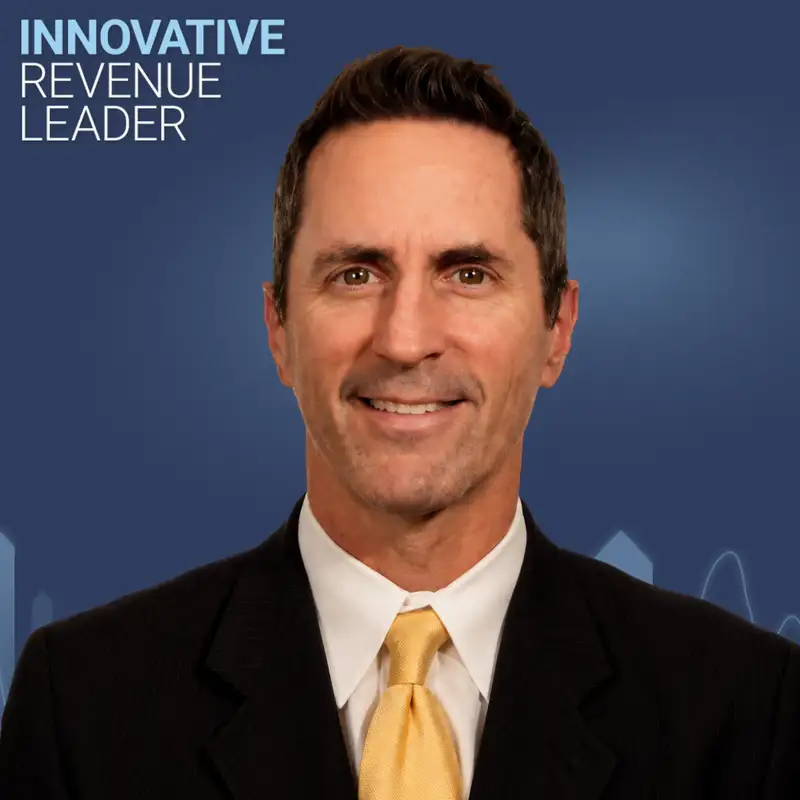
IRL - Larry Peters
===
Speaker 2: [00:00:00] Welcome to the Innovative Revenue Leader Podcast. I'm your host, Seth Mars. Join me as we deliver practical insights to help B2B CROs Find new and innovative ways to grow in this fast changing environment. The Innovative Revenue Leader is sponsored by Sandler, a triad company, empowering sales professionals and leaders to master the craft of selling at all levels.
squadcaster-jf2a_2_06-26-2026_160516: Welcome back everybody. Today's someone I'm really excited to introduce. He's a sports and entertainment revenue executive, brand partnership strategist, and live event specialist. He has spent over fifteen years driving revenue across MLB, NFL, NBA, NHL, and MLS, and as well as major entertainment companies including Live Nation, AEG, and WME.
He served as SVP, uh, at Tapit, bringing cashless payment and data technology to live events across North America, and he's led sales at ISM Connect. They're a [00:01:00] smart engagement network reaching a hundred and ten million consumers across a hundred venues ac- uh, nationwide. He's currently the CRO of World of Dance.
Larry, so great to have you on.
larry-peters_1_06-26-2026_130516: Great. Thank you very much for having me. Appreciate it
squadcaster-jf2a_2_06-26-2026_160516: Yeah. So le- let's jump in with a, a mean-- Just from a high-level quest- a high-level question around, like, what's the most innovative thing that you're seeing in, in B2B go-to-market right now?
larry-peters_1_06-26-2026_130516: Well, I mean, the, the, the obvious answer is AI,
and really the impact of AI, right? So, um, and what's interesting about, a-about it is, when it initially came o-came online, came, came about, the thought, at least I, I'll speak for myself, was this us in a way where we are, we are actually having fewer sellers and still accomplishing more?
squadcaster-jf2a_2_06-26-2026_160516: Yes
larry-peters_1_06-26-2026_130516: but, but, but interestingly enough, as I've gotten deeper with AI, I really feel like if you had 1,000 sellers [00:02:00] and now you're thinking with AI I can do it with 200, um, really the impact if I have AI, what can I impact on 1,000 sellers, right? So
if you look at the arc of a sale, just roughly, you got the research, outreach, meeting, proposal, negotiation, close.
Kind of your arc. Where you're spending your time as a salesperson is really, you know, you've got to go through the entire arc to get to the close, not, if you're not doing it properly, you're missing, you'll miss to get to that point.
What AI really does is allow you to spend your real time in the part of the arc that is the most, right?
So you
have to research. when I was much younger before AI, I used to use this example, if you had a 30-minute window per sale,
squadcaster-jf2a_2_06-26-2026_160516: Mm-hmm.
larry-peters_1_06-26-2026_130516: when I was younger, you'd be 25 minutes of that 30 [00:03:00] minutes figuring out who is Seth, what's his role, what's his
phone number, what's his email, and then the last five minutes, what I want to tell him about what, why he should be working with us.
Now it's the complete opposite. You have all that information, so now you can truly spend your time on what am I saying to this person and why does it matter? So I think the impact of AI is now it's not about productivity being efficient and removing, it's productivity and being efficient and enhancing your entire team, making them all better as opposed to fewer
squadcaster-jf2a_2_06-26-2026_160516: Yeah. It's, it's really interesting 'cause you've seen that, that kind of change over time, right? Like everyone starts talking about these roles going away, but it's just not as simple as that, and a sale is not as simple as that. So as, as people are starting to get a hold of this and do things, you can kind of see, yeah, I can enhance a seller, but I can't make them, I can't, I can't make them go away per se.
One of the things I was gonna [00:04:00] ask about, like when you, when you look at the way this is changing, right? You talked about the research piece. One of the things that I'd be really interested in how it's happening to you in the field with your teams is how are they handling, how are your sellers handling a world where I used to learn by doing the research, and then that would help me to the five...
When I got to the five minutes of what to say, I had all the research in my brain to be able to do the five minutes. Now, I have all the research in five minutes, how are they going about translating that in the next twenty-five minutes into a, like using all of that to properly do, apply it into a message
larry-peters_1_06-26-2026_130516: that is a great question, and that is, that is-- I don't wanna be, uh, generational here, but that is really, really really
squadcaster-jf2a_2_06-26-2026_160516: Yeah
larry-peters_1_06-26-2026_130516: that is something that I stress and believe in. So, so obviously in my role, I will get [00:05:00] solicited for different technologies that people wanna talk
squadcaster-jf2a_2_06-26-2026_160516: Yeah
larry-peters_1_06-26-2026_130516: people wanna sell me to. And what I've done over the, over the last couple years is I walk out Friday afternoon, I'm on the West Coast, Friday afternoon for two hours, believe... I, I try to respond to everybody who, who reacts, who, who reaches out to me because I know
squadcaster-jf2a_2_06-26-2026_160516: Yep.
larry-peters_1_06-26-2026_130516: So I try to use that time later on Friday and just do those kind of meetings. But I can't tell you, Seth, how... In the beginning, I would appear, I could tell it was AI generated, you calendy. I would appear, pop up, someone pop up in front of me, and I could tell they had no idea who I was and why they were there. They just knew it was on their calendar. And they would start with Uh, so, so why don't you tell me a little about yourself, Larry,
squadcaster-jf2a_2_06-26-2026_160516: Yep
larry-peters_1_06-26-2026_130516: what you're doing? And as a sales guy, I would launch into, well, the dance and what we're doing. And I started realizing he doesn't or she [00:06:00] doesn't know why I'm here, but she-- they're trying to get to, whoa, okay, now I know why. Now what I do is, "No," I said, "I'll tell you what. You reached out to me. Why don't you tell me what I'm doing?" And that's the thing that I work with our folks all the time and believe in wholeheartedly for myself. It's all process. So you have to understand why are you doing what you're doing? Why does it matter to them? Whatever your technology is, whatever your product is, does it matter? Not just what can it
squadcaster-jf2a_2_06-26-2026_160516: Yep
larry-peters_1_06-26-2026_130516: So th- if you're coming from that standpoint, you can literally use AI to ask the right questions, and you're formulating that proc-- you're formulating that of what you're doing or utilizing that tool as opposed to just the tool's doing all the work and you're just showing up and trying to [00:07:00] kind of wing it at the end.
But I agree with you, that's a big challenge because it's so easy. It's almost so much information
and, you know. When I was a kid, we used to dig with our s- You know, we can't be, we can't that guy either 'cause they're young
squadcaster-jf2a_2_06-26-2026_160516: Yep
larry-peters_1_06-26-2026_130516: but you kind of have to help them understand how you're going into the process with the mindset of understanding what you're targeting, who you're targeting, why you're targeting, it feeds all that as opposed to making it, making you lazy
squadcaster-jf2a_2_06-26-2026_160516: It, it's interesting, right? Because when you say that, it also makes me think these are people who thought the end game was getting on the phone with you because it, it was-- it's so hard to get on the phone with somebody. It's like, I'm succeeding when I get on the phone with you. It's like, no, no, no, you just got a ticket to enter.
Now you have to prove your worth. And they've kind of, yeah, they've reverted back to that old, like, I need to get to know you a little bit. And it's like, [00:08:00] nope, you should know me. what percentage... Oh, go ahead.
larry-peters_1_06-26-2026_130516: because there's so much information, the expectations are higher too, right?
Like,
squadcaster-jf2a_2_06-26-2026_160516: Yep
larry-peters_1_06-26-2026_130516: you, y- you expect someone know more. And so if they don't, you're actually kind of surprised. Like, "You don't know who my competitors are?" Because it's sitting out there.
squadcaster-jf2a_2_06-26-2026_160516: Yeah
larry-peters_1_06-26-2026_130516: When you were younger, no one expected that because you're scrambling to find their phone number,
squadcaster-jf2a_2_06-26-2026_160516: Yeah.
larry-peters_1_06-26-2026_130516: you know? We can
You-- They've shown me things where I can like, specifically everything they've bought and why.
squadcaster-jf2a_2_06-26-2026_160516: Yeah
larry-peters_1_06-26-2026_130516: you can't kinda... It's almost too much sometimes, but yeah.
squadcaster-jf2a_2_06-26-2026_160516: Oh, go ahead
larry-peters_1_06-26-2026_130516: I hear too is everyone's going, " I don't like it because everyone's using it on me, and I don't wanna use it on them."
And you're like, "Well, yeah, hey, that's the world, that's the world we live in now."
squadcaster-jf2a_2_06-26-2026_160516: But you work in a, in a fairly analytical world too that represents B2C to a [00:09:00] certain extent, or you're right on the cusp of it. In B2C it's been like that forever. When we go to buy something, I don't expect to see anything but what I want, like especially online. But that's now starting to come to B2B and in the sales.
I, I have a question for you. What percentage of time when you turn it back to these, to these people when they're asking to talk to you, can they properly answer your question about them telling you about what
larry-peters_1_06-26-2026_130516: there's two things that tend to happen. Is c- I, I, I wanna find out who really wants to speak with me. And this isn't about me. This is not, this is not about Larry. I'm talking about just the sales process.
Will someone in New York or Philadelphia, where I'm from originally, will they get on a call with someone... Again, I don't wanna make this generational about young people, that's not fair. At, you know, 6:00 their time, right? Will they do that? They, they might not. I've had m- meetings at, at that point in the afternoon get canceled. [00:10:00] not putting... It could, anything could be happening, but you, y- it wouldn't surprise me.
I don't wanna even talk. I don't know who this guy is.
And second of all, do they... had a guy actually go, "You know, sir, I'm not really sure." I said, "So, what do you wanna do?" He said, "I, I, we, we can end now." but... And I don't, and I'm not doing it to be hard on people. That's a time that it c- it's quiet for me, so I can do it. But it is interesting I, to note it. And, and like I said, Seth, in the beginning it was, "Hey, Lar- so Larry, great to meet you. Uh, tell me a little about yourself." And I would, boom. Now we're doing this, and we're gonna do
that, and we're global, and we're Gen Z. And I'm thinking, "Why am I d- why am I
doing this?"
squadcaster-jf2a_2_06-26-2026_160516: Seriously. That's so, that's awesome. So when you... So you've built revenue engines across a, a bunch of sports leagues, the NFL, NBA, Live Nation, now World of Dance. Like, what's one thing that you see top performers do that holds up in all of those [00:11:00] different environments?
larry-peters_1_06-26-2026_130516: I think, I think the top performers, uh, and this is what I stress with people that I know I work with, focus on, focus on-- Don't stay solely focused on their capabilities. When I was younger, we would make a mistake. We'd build a 35-page deck and tell people, "We can do this, and we can do that, and we're bigger than Disney, and we're bigger than the NFL, and our
audience is..." And then after, after the presentation, kind of walk away and expect this person to take all that in and decide why it matters to them. Really, really, really good salespeople understand I have to create value in relationships quickly, and I have to understand their needs are and why what I'm doing helps them. I, uh, when I was, uh... My first part of my career, first 13 years, was at Easterseals
in Philadelphia, [00:12:00] fundraising. We were, we were a five-county, five schools, uh, preschool dis- kids with disabilities, and I was right out of-- I mean, 20-something, and it was, it was an amazing time. But there's a, there's a, a poster you see, everything I needed to know I learned in kindergarten, and it's, like, sharing, caring, being
good, um, like, all the things that really, really matter.
And I'm like, well, everything I need to know development I learned at Easterseals because I did-- I had no assets. I had to build relationships quickly. I worked at a very senior level because a lot of companies didn't have, have, uh, char-charitable, uh, divisions then. I would t- the CEO made that decision. So I'm 20-something with no experience talking to CEOs, which was really a learning experience, but it also taught me that everything is about them.
My biggest fight in when I was being brought into SAS and-- SAS companies that wanted to, [00:13:00] wanted to be, wanted to be in sports, I always-- my argument internally was we should be hiring salespeople from the NFL
to learn our tech, not tech people trying to sell to the NFL who don't understand who they're talking to. So good salespeople always, I believe, always remain focused on them, not us. A guy once taught me, "If I, if I know how you make your money, I can figure out how to make mine,"
but it's about you, not about me. And sa- the salespeople that are good understand that. Salespeople that don't and were focused on what I can do for you, look what, look at, look, look, all, look at all we can do, but aren't making that connection, I think run the risk.
It works, but can
squadcaster-jf2a_2_06-26-2026_160516: Yeah. Fascinating. So, like, y-you mentioned something that I kinda wanna double-click on, is you talked about, "I'm not gonna go get a technical person that knows what I'm selling. I'm gonna go get-- I'm gonna go look for people that are my [00:14:00] buyers, the people who would understand my buyers better." Can you talk a little bit more about that?
'Cause that's, that's interesting, right? You're not... It sounds like what you're saying is, "Hey, I can train you up. I can get you-- I can teach you how to do all the things to be a great salesperson, but I need you to connect, to connect fast. So I'm gonna hire in people that, that understand my buyer and then teach you how to be a great seller, 'cause if you have those two things, you could be successful."
larry-peters_1_06-26-2026_130516: That's, that's... And so I, I, I have a lot of pushback against that. That's how I look at it. So, so we had... TapIt was a great example. TapIt was the, you know, the pay, pay system through the team app.
And we had a lot of also, it had a lot of residual elements as well. It, it was data, it was, it was engagement, and a lot of really cool, cool, uh, technology. And the fight I would have internally is they wanted to bring in SaaS sellers who were used to selling that kind of product. believed, 'cause [00:15:00] we worked with all these leagues, I wanted people that understood the NFL, Live Nation. I was fortunate that I oversaw North America, and I could plug into each one of those environments and know, like when, when, when that, when we sit across from that person, able to s- relate to, "Yeah, I came out of the Vikings," or, "Yeah, I've been with Live Nation for th- few years."
You... They know immediately you know their problems. And this goes back to what I was saying before. Technology, my fight with these guys was tech- the technology capabilities don't matter if they don't matter to them. And you would take... You say sports. In this environment, the consumer experience in a football game, a soccer game, a football game, a b- baseball game, a hoc- it's very different although it looks the same.
And when you're [00:16:00] talking about the kind of technology we were working with, I wanted, uh, and I, and I had... They gave me the chance to do it. I built an entire sales team where everybody I got came from those, those industries, and could have that kind of conversation comfortably. And it always allowed them to take technology and bring it down to the real world
and have a conversation that was focused on what they needed to have happen, and know that they'd been through it, opposed to thinking about it theoretically and telling you how whiz-bang what I can do, but all of a sudden not...
So, quick story. I was about two weeks in to TapIt and had a call with the Philadelphia Eagles, my hometown team.
Now, they knew... The guy who set it up knew I was from Philadelphia. We had a proposal in front of them. Philly, Philly talks to each other differently than they might typically.
So I got a meeting with their, with their chief, with their chief financial officer, and [00:17:00] you know, it was abrupt. He didn't
believe in data. I was two weeks in, Seth, so I was basically talking points from a pamphlet. I didn't know anything. And I would say things and he w- I would go, "Yeah, well, we can do this, and we can increase..." So basically, TapIt's at that was because they came from RFID, and when you put RFID into a festival, the minute you go to that, you tend to increase your sales by upwards of 20% because people are just moving faster.
They're not digging into their pocket So that was the big pitch. And he said to me, he goes, "Oh, so you can increase merchandising sales?" I said, "Absolutely. 20%." He goes, "Really? 20%?" I said, "Yeah." He said, "Okay, you got a paper- p- piece of paper there and pencil?" "Yeah." I said, "Write this down." He wrote, gave me a phone number. He said, "That's the guy at, who, who, who, uh, I sold our rights to. Talk to him [00:18:00] I don't... I get $20 million. I don't have that. I don't care how much they sell."
And it was interesting because it, it was, you know, he laughed at me, but he knew I was from Philly, so he was being harder on me.
squadcaster-jf2a_2_06-26-2026_160516: Yeah
larry-peters_1_06-26-2026_130516: I said, "Fine." I left and I realized, I don't know. I don't know what he needs to have me do for him.
And I, you know, I was two weeks in. I hadn't thought about it the way I should have, but that's the point. What they do at a football game is different than a baseball game, is different than a soccer game, and if we don't know that, we're, we're gonna run the risk of losing a sale. When I was, uh, in s- in the emerging, the early days of X Games and, you know, that was an area of sports I didn't know a lot about.
It's very, um... It's got a lot of like, uh, brands that endemics who know the sport, know the culture. [00:19:00] my conversation, my, my, my, my, my commentary at the time was talking to brands that know the environment. What was never really that risky for me, because I was always honest about what I didn't know. I'm, I'm comfortable with not knowing everything. So sometimes br- endemic brands would actually take that as a po- "Oh, you're not trying to bullshit me," and they'd actually try to help me through a conversation. What I was getting nervous is brands that don't know the space and I don't know, and we're talking past each other. Opportunities are going, I don't know enough to make the connection, and that's why I always felt like if you came, if you get people who understand where they're from, they can connect that dot much more quickly. And, and at the very least, you come across credible
and you come across focused on their response, their needs as opposed to capabilities
squadcaster-jf2a_2_06-26-2026_160516: That it makes total sense. The-- So take me through like a coaching scenario with that, right? Because you're building... You talked about how you're [00:20:00] working to build relationships across all these different dynamics of different-- Like, 'cause if there's ever like clubs, right? They're literally called club. But like sports are so ingrained, and I think it seems like, like you've figured that out, right?
Like if you're not in the club, you're not in the... It, you, it's harder for you to even be a part of it. You bring people in that are gonna be a part of it, and then you're training them. What's a coaching conversation look like where you're trying to help that person? And it seems also you're also trying to understand those pieces too.
So it's a two-way type coaching situation to a certain degree, at least for a time.
larry-peters_1_06-26-2026_130516: Well, I mean, when it comes to technology, the key is always having-- I don't want to-- Look, if it, if, it is impactful, effective tech, it works. Let's just assume that, that Binmore didn't, but this, it works. It's gonna have a, it's going to have a value [00:21:00] to the team.
squadcaster-jf2a_2_06-26-2026_160516: Mm-hmm.
larry-peters_1_06-26-2026_130516: Then the key becomes for the coaching, it almost becomes self-evident.
If they own, if they come from that world, they know what-- they, they know why this matters.
squadcaster-jf2a_2_06-26-2026_160516: Yeah
larry-peters_1_06-26-2026_130516: then it um, becomes a-- the value then becomes, is it fitting all the needs we say it does? And is it, is it, it do what we say it can do?
So, a guy once told me that all client doubt, all client doubt comes from the salesperson. So coaching becomes all about getting the salesperson to believe they're talking about is going to have the effect that they want it to have. That's your coaching all the time. My job is to remove doubt from my team and make them believe, not hyperbolically or, or, or as a rah-rah, we're doing really does matter. [00:22:00] Because if you can do that, you can have a very effective team. you don't do that, it can fall apart pretty quickly. when it comes to technology in those environments, it really comes down to do-- is this a beta
Or is this actual, right? And I've been in both places where literally what, what, what we were demoing was really not our stuff. was it was
squadcaster-jf2a_2_06-26-2026_160516: Been there
larry-peters_1_06-26-2026_130516: be. It was scary. But-- and once that creeps in, you're done. So that's really the, that's really the coaching. Can I remove the doubt about what the value proposition is from the sales per- to sales team such that they can speak confidently? And then, you know, the sales process is a different conversation
squadcaster-jf2a_2_06-26-2026_160516: Yeah
larry-peters_1_06-26-2026_130516: can have, but that is my primary coaching, remove all doubt
squadcaster-jf2a_2_06-26-2026_160516: You don't hear people say that very much, but you watch it happen all the time [00:23:00] because if a seller doesn't believe in the product, it immediately shows. And it, God forbid, you have multiple products and you want them to sell one they don't believe in, they will never sell it because they will go other places.
So, I mean, I think it makes, it, it makes more sense
than people even realize that in order for your sellers to sell, you need to make sure that they believe in the product, that you've sold the product to them in a way that they can go in wholeheartedly. I know the industry. I've connected the dots. I'm-- You can imagine the gen-- how genuine it would be in front of a customer once they buy in.
It's like, "Look, I've been here. Here it is." Like
larry-peters_1_06-26-2026_130516: And it's the value proposition is in multiple areas. It's not just the capabilities. I,
I've been in
squadcaster-jf2a_2_06-26-2026_160516: Yeah.
larry-peters_1_06-26-2026_130516: It's the
squadcaster-jf2a_2_06-26-2026_160516: Yeah,
larry-peters_1_06-26-2026_130516: Simply understanding that, they're not-- This, this is too expensive." It, it-- Yes, we're gonna help them, but we're-- It's not a-- They-- It's not gonna do it. Uh, [00:24:00] with-- There, there's only eight games. It, it doesn't make sense. And they, they brought-- We could bring that type of insight because when you, when you, when you develop pricing as a spreadsheet and a percentage of, of revenue... Yeah, but... And this was a fight I had at the time. "Yeah, but it's on- we're only asking for 2% of their, of, of their overall projected revenue."
Yeah, but that's not how they-- that's not, that's not how it plays. You're asking for $15,000, uh, or, Yes, they got a... But it's against an eight-game schedule. The te- It, it never gonna pay for itself because the revenue comes from so many other lo- Like, anyway, that's in the weeds. it's all those things I've gotta keep removing those el- those little blocks, so a salesperson can walk into a room and put the
squadcaster-jf2a_2_06-26-2026_160516: Yeah
larry-peters_1_06-26-2026_130516: in it, whether it happens or not.
That's [00:25:00] coaching. That when you're there, that's all that matters. Your team wants to go, wants to be there,
squadcaster-jf2a_2_06-26-2026_160516: Ma-
larry-peters_1_06-26-2026_130516: wants to deliver. They feel good about it every day.
squadcaster-jf2a_2_06-26-2026_160516: makes perfect sense. And it's the 80-- Like you talk about 80/20 rule, right? Like it's the 80% that ma- it's, it's the 20% that makes 80% of the difference is in that right there
larry-peters_1_06-26-2026_130516: Yeah. And, and, and I, I can-- I have been in environments where I knew who those... who my top guys were, top persons, w- men and women. And I would, you know, when I was, you know, we were-- when we were tied to radio, the feeling was you can just keep cut- you can keep-- can just keep chopping off the bottom keep, you know, stay on top, chop off the bottom, stay on top, chop off the bottom.
And I just was never a believer in that. First of all, I thought it was, it was uncomfortable.
squadcaster-jf2a_2_06-26-2026_160516: Yeah.
larry-peters_1_06-26-2026_130516: But ultimately, once I, I had my-- I [00:26:00] knew, I knew how to talk to my best people because-- and, and I, I would focus on what are the things that they need? What does he need and she need? And that's different. Like everybody was...
What did, uh, um, forget what Jimmy Johnson said. You know, everyone is treated fairly but not the same, right?
squadcaster-jf2a_2_06-26-2026_160516: Exactly. Yeah
larry-peters_1_06-26-2026_130516: to be able to know who, what's motivating each one of them and focus on that. And I always felt like it was my responsibility take the ones on that 80%, the ones that are s- on the bottom, how do I get them better?
I don't think anyone takes a job, and I could be wrong, to
squadcaster-jf2a_2_06-26-2026_160516: No.
larry-peters_1_06-26-2026_130516: It
squadcaster-jf2a_2_06-26-2026_160516: No
larry-peters_1_06-26-2026_130516: happens to be things start to happen, it starts to spiral, and can you get them to where you want them to be in a way that works for them so you're c- you're, you're, you're not just cutting off the bottom, your team is getting better from
squadcaster-jf2a_2_06-26-2026_160516: Yeah.
larry-peters_1_06-26-2026_130516: up
squadcaster-jf2a_2_06-26-2026_160516: so one more question around, [00:27:00] around sales side of things. Art or science? Sales, is it, is it art or science? What's your take?
larry-peters_1_06-26-2026_130516: I think it's, I think it's as much both. I mean, that's a simple answer, but I, I think there, I think there's a science that can come in the process that allows you to be more artistic in the presentation, right? So
you have to bring-- If you're not grounded that process, you can run the risk of being all over the place, right? Nick Saban has a quote, "Don't ever get distracted by winning." So he, he believed that what you... And I build my teams around what we do Monday through Friday in this week will take us to where we need to be by the end of the year or the end of the quarter or wherever we need to be, but it's about now. So that's kind of the science of it.
squadcaster-jf2a_2_06-26-2026_160516: Yeah
larry-peters_1_06-26-2026_130516: the artistic is, can you tell a story? When I've gone into these emerging companies, and I've been in a few, [00:28:00] my first tap it, uh, you know, e-even, even, even World of Dance now in some ways is emerging. conversation is always when I walk in the door that first week, "What story am I telling? What, what's-- Who, who's my audience and what am I telling them? What's my story? Why does, why is what we're doing matter?" And it, it, that sounds like, wow, I... But it's really how I think about it. What am I and what am I saying that will make a difference for whoever I'm speaking to and who am I speaking to? the largest Gen... We're a global Gen Z, you know, platform with a lot-- Like, my story?
And that's kind of the art of it, but you've gotta be grounded in the science
squadcaster-jf2a_2_06-26-2026_160516: So another take on this one. If I were to go back five years and look at the levels of art versus science, would you say that if you look then it was more art back then and less science, and now it's more science and less art? Or do you think it's held firm [00:29:00] across
larry-peters_1_06-26-2026_130516: I think it's held pretty firm across in terms of, uh, you know, the science piece is really all of the tools, all of the, all the things you have at your disposal, but that there, five, 10, 15 years ago. Um, I think the art has always been around, you know... I've had one person disagree with this, but, but I've al- I was taught at a young age, people buy people.
squadcaster-jf2a_2_06-26-2026_160516: Yep
larry-peters_1_06-26-2026_130516: At the end of the day, all things being equal, I'm gonna buy from Seth and because I like S- I, I trust him, I relate to him, it works, as opposed to Larry, who I think he's just trying to sell me, right? So, you know, and that was one of those going back to Easterseals, you don't have a product to sell, it's all about relationships, [00:30:00] and that is the art of it, the ability to connect with people in a way impactful and meaningful. And, you know, used to always tell people too, in sales, what was interesting for me, when you come from that perspective is, I have to understand everybody else's business. It
doesn't, you know... I have to know, like I said, if I know how you make your money, can make mine. So that means I have to understand, I have to learn ab- learn through them what are they dealing with?
Is it, "I'm a manufacturer. I'm a, the, the largest baker in Philadelphia. I'm an insurance
company. I'm a Burger King." Like, okay. So, you know, I... The story, I was in my young 20s and I met this guy who, uh, had bike hel- he was a bike company. We were doing a, we were doing a bike-a-thon, and I went to him and asked for a donation of like 2,000 bike helmets, right? He sat there and [00:31:00] listened to me, the pitch. He was-- I was 22. And he sat there and he looked back and he said to me, he said, "You know, let me ask you a question, Larry. How many bike helmets do you think you buy in a lifetime?" I said, "I don't know." He said, "Just guess." I said, "One?" probably right. It might be two, but let's say one. Do you think it makes sense me to give away 2,000 bike helmets? Or would it make sense for me to donate a coupon for someone to buy 2,000 bike helmets, and let me give away two to the winner so they see them?"
squadcaster-jf2a_2_06-26-2026_160516: Yeah
larry-peters_1_06-26-2026_130516: I go, "Yeah, that makes more sense."
he, said, "You know, if you're talking to a Burger King, you can give away 1,000 hamburgers,"
right?
But it was-- So I-- It taught me how to understand I need to know they need to do so I understand how to talk to them, and that's, that's kind of the, the art of it is kind of that kind of feeling and [00:32:00] understanding. But that science provides all that information for you nowadays, which is really important.
squadcaster-jf2a_2_06-26-2026_160516: So let's talk a little bit about you. I mean, you're in the sports world, entertainment. W- as a kid, is, was that something you were really passionate about that kind of led you there? Like, w- w-
larry-peters_1_06-26-2026_130516: I loved football. I mean, I, I played it, uh, every day, all day, uh, rain. I, I was captain of my high school team. Uh, I, I loved it. I was never quite big enough to go to the next level, but then I ended up coaching for 13 years.
So at one point, I wanted to be a coach and be in sports. uh, Easterseals was that first job, and that was hardcore biz dev.
Wasn't Getting paid a lot, but it got me into the, you know, it got me exposure to all the media, all of the teams,
all of the... that, that kind of environment. So I started really seeing, I didn't know you could do those things. The business side of [00:33:00] sports has always been interesting to
me. And for me, I just love that kinda business of things. Like, you know, like the... You see the business of music, the business of football, the business of, you know, dance. Like, it, it just, it's just always fascinated me. So that's really what kind of drew me, and I, much to my wife's chagrin, um, I'm naturally gravitating towards emerging things as opposed to being a transactional guy. I like to kinda go where no one's gone before and then try to figure it out, that's, you know, unbel- I think it should be where the money is, but it really isn't You know? Instead of falling for transactions, I like to go where, you know, people bring me in where they're really having a problem and try to solve it, and that's kinda how that kinda got into it.
But football, I mean, I just, [00:34:00] I c- I couldn't get enough of it. I, I loved it so much. It, it was all, it was all, it was all, it was all about all I, all I wanted to do. If I had my dream, I would leave LA tomorrow to be a part of the Philadelphia Eagles. There's no question about it
squadcaster-jf2a_2_06-26-2026_160516: Yeah. Yeah, yeah. I can see that. I can see that. Um, so where can people, if they want to learn more about you or follow you to, to hear some of the things that... You write a lot of great content online and your perspectives around sales and how it should work, the process versus the si- the, the, uh, the way you should do things.
Like how should they, how can we get in touch with you and then learn a little bit more about your company that you're working with?
larry-peters_1_06-26-2026_130516: I mean, uh, uh, I, I, I get a lot of... Always through LinkedIn. I mean, LinkedIn reaches out to... I get a lot of people who inquire about LinkedIn. I love to, to, um, do a lot of, uh, re- reacting to posts.
Right Now we're, uh, I'm in a big push for bringing in investors into World [00:35:00] of Dance. World of Dance is an amazing uh, property, Gen Z, as I mentioned earlier.
Uh, y- 18, it's an 18-year-old, uh, blue chip startup believe it or not.
squadcaster-jf2a_2_06-26-2026_160516: 18-year-old
larry-peters_1_06-26-2026_130516: They have a TV show. We're working with MGM Studios on another TV show. We're bringing in investors, but amazing what these two founders have built. I met them way back in 2008, and now we, we reunited, uh, about a year or so ago. But that, that's, that's my big passion right now.
But always, you can always reach me through LinkedIn, and I, I respond to everybody as much as I can
squadcaster-jf2a_2_06-26-2026_160516: That's fantastic. I, I really appreciate you having o- ha- you coming on. It's been great talking to you. Thank you
larry-peters_1_06-26-2026_130516: Yeah, great pleasure. Thank you very much. I appreciate it
Speaker: And that wraps up another episode. Thank you for joining. For show notes and other episodes, visit us@innovativerevenueleader.ai. The Innovative Revenue Leader is sponsored by Sandler, a Trilia company. Sandler provides top [00:36:00] corporate sales and business development training while empowering sales professionals and leaders to master the graph of selling at all levels.