Seth Marrs Guest

Seth Marrs

Appears in 27 Episodes

#47

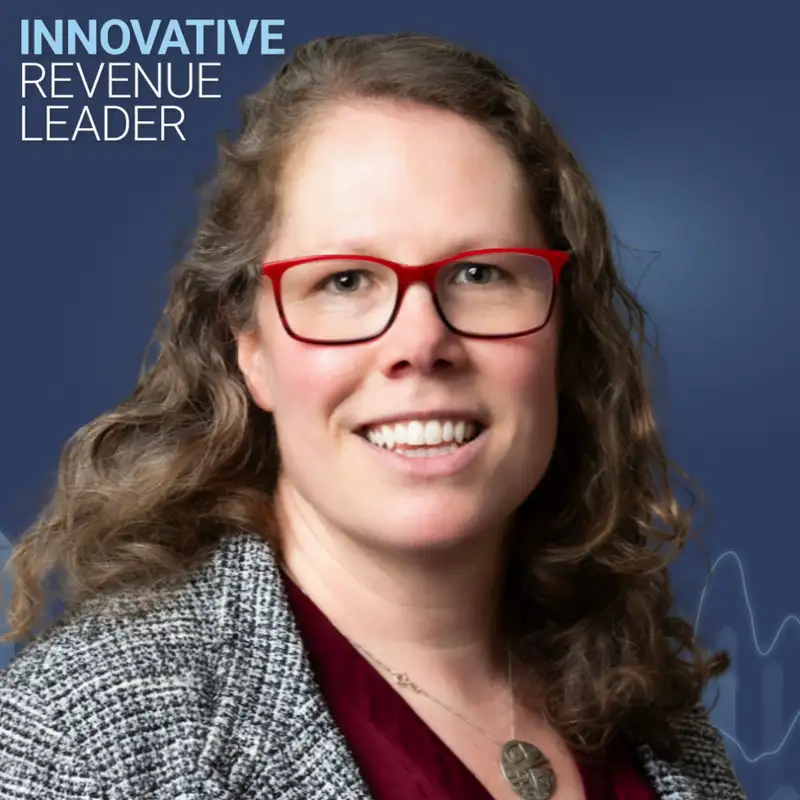
Momentum Over Perfection - Heather Rinke - Innovative Revenue Leader - Episode #47

On this episode of Innovative Revenue Leader, host Seth Marrs sits down with Heather Rinke, Salesforce Product Director at Sercante, TEDx speaker, and a nearly two decade Salesforce veteran with 18 certifications to her name. Heather has spent her career helping organizations get real value out of their CRM, and in this conversation she explains why so many sales leaders see the tool as a burden rather than an asset, why the marketing to sales handoff is usually the most fragile point in the pipeline, and how bad data quietly undermines every AI initiative built on top of it. The conversation moves from tactical fixes (automating stage progression, aligning teams around a shared definition of the buyer journey) to a bigger philosophical point: technology only works when the people using it are actually enabled to use it well. Heather closes with a personal reflection on trading perfectionism for momentum, advice she wishes she had gotten the day she graduated college.  Takeaways: Friction in the CRM is a symptom, not the problem. When reps build shadow spreadsheets or keep private notes to manage deals, it usually means the system was built for management oversight rather than active selling. Fix the root cause, not the symptom. Start with the marketing to sales handoff. Heather calls this the most fragile point in most pipelines. Misaligned definitions of "qualified" between teams create real revenue leakage and a frustrating buyer experience. Anchor your stages to the buyer's journey, not your internal process. Bring sales, marketing, customer success, and IT into the same room to agree on milestones, ownership, and what information needs to be captured at each step. Automate stage progression wherever possible. Instead of relying on manual updates that happen ten minutes before the weekly pipeline call, connect stage changes to behavioral and event driven triggers so the pipeline reflects what is actually happening. Clean your data before you scale AI. Duplicate contacts, outdated titles, and stale records do not just sit there quietly. They get amplified the moment you layer AI on top, turning small data problems into fast, confident mistakes. Enablement determines adoption, not the tool itself. Standing up new technology without training the team on why it matters and how it helps them personally is one of the most common reasons AI and CRM initiatives fail. Trade perfectionism for momentum. Ship the work, gather feedback, and iterate. Waiting for something to be flawless costs you the opportunities that come from moving quickly. Quote of the Show: "Buyers don't care about your internal process. They're expecting one continuous journey." - Heather Rinke  Links: LinkedIn: https://www.linkedin.com/in/heatherrinke/ Website: https://www.sercante.com/ Ways to Tune In: Innovative Revenue Leader Website: InnovativeRevenueLeader.ai  Spotify: https://open.spotify.com/show/4Hn0sJKCzneggQj3j4XKo3?si=02c4c44769dc41bb  Apple Podcasts: https://podcasts.apple.com/us/podcast/the-innovative-revenue-leader/id1843401468  Amazon Music: https://music.amazon.com/podcasts/48477601-e33b-4c80-a4af-739863e58131  Podchaser: https://www.podchaser.com/podcasts/the-innovative-revenue-leader-6233089 
#46

Enhance, Don’t Replace - Larry Peters - Innovative Revenue Leader - Episode #46

AI isn't here to shrink your sales team, it's here to make every seller on it better. That's the game-changing perspective from Larry Peters, CRO of World of Dance and a revenue executive with over 15 years driving growth across the NFL, NBA, MLB, NHL, MLS, and major entertainment brands like Live Nation, AEG, and WME. You'll learn how AI is reshaping where sellers spend their time, why buyer expectations are rising as information becomes more accessible, and how hiring people who understand your buyer's world can outperform even the best technical sellers. Larry also breaks down his approach to coaching, why removing doubt from your team matters more than rah-rah motivation, and how the same "art and science" balance drives sales success, whether you're selling to the NFL or a Gen Z dance platform.  Takeaways: AI's real value in B2B sales isn't reducing headcount, it's freeing sellers from time-consuming research so they can spend more energy crafting a message that actually resonates with the buyer. Rising buyer expectations mean sellers can no longer lean on introductory small talk. Buyers increasingly expect sellers to already understand who they are and why the conversation matters before the call even starts. Larry has built winning sales teams by hiring people who come from the industries he's selling into, rather than technical experts unfamiliar with the buyer's world, because credibility and shared context close deals faster than product knowledge alone. Great salespeople stay focused on the customer's needs rather than their own company's capabilities. Larry credits this mindset to his early career in nonprofit fundraising, where he had to build trust and relationships with no product to sell. Larry's core coaching philosophy is removing doubt. He believes client hesitation ultimately traces back to a seller's own uncertainty about a product's value, so his primary job as a leader is building that conviction on his team. Rather than continuously cutting underperformers, Larry focuses on understanding what motivates each individual seller and coaching them up, treating people fairly without treating them all the same. Larry sees sales as equal parts art and science: process and preparation create the foundation, but the ability to build authentic relationships and tell a compelling story is what ultimately makes people buy. Quote of the Show: “All client doubt comes from the salesperson.” - Larry Peters Links: LinkedIn: https://www.linkedin.com/in/larry-peters-/ Website: http://www.worldofdance.com Ways to Tune In: Innovative Revenue Leader Website: InnovativeRevenueLeader.ai  Spotify: https://open.spotify.com/show/4Hn0sJKCzneggQj3j4XKo3?si=02c4c44769dc41bb  Apple Podcasts: https://podcasts.apple.com/us/podcast/the-innovative-revenue-leader/id1843401468  Amazon Music: https://music.amazon.com/podcasts/48477601-e33b-4c80-a4af-739863e58131  Podchaser: https://www.podchaser.com/podcasts/the-innovative-revenue-leader-6233089 

#45

Moving AI from Novelty to Infrastructure - Jim Iyoob - Innovative Revenue Leader - Episode #45

Transform your revenue operations and elevate your customer experience strategy with actionable insights on integrating AI into core workflows, building trust through genuine sales curiosity, and creating a closed-loop feedback system. It’s time to move beyond surface-level metrics and leverage real-time interaction data to drive long-term business growth. Who better to guide you through this evolution than customer experience veteran, twice CX Hall of Fame inductee, and CRO of ETech Global Solutions, Jim Iyoob? In this episode, you will learn how to turn frontline contact center intelligence into actionable insights for marketing and training, align your cross-functional teams around a shared definition of success, and structure compensation plans that reward true customer retention over quick wins. Get inspired to move past rigid scripts, cultivate a mindset of genuine curiosity, and deliver effortless experiences that keep customers coming back. Takeaways Shift AI from Novelty to Infrastructure: The most successful organizations have stopped chasing shiny demos and are instead using AI to instrument and optimize their existing workflows to achieve measurable business outcomes. Implement a Closed-Loop Process: Leverage real-time interaction data to directly inform hiring, training, compensation, and cross-functional strategies across marketing and sales. Sell with Genuine Curiosity, Not Scripts: High-performing sellers ask thoughtful questions and focus on understanding the prospect's real pressure points rather than pitching generic features and benefits. Align Sales Comp with Customer Retention: Structure tiered compensation plans that keep sellers engaged long after the initial deal closes to ensure smooth implementations and long-term retention. Ditch Rigid Funnel Reports for Honest Assessments: Effective sales forecasting requires transparent, honest conversations about deal blockers and true buyer timelines rather than relying solely on static CRM data. Quote of the Show "The companies that are winning are the ones who stopped chasing the demo and really started instrumenting their own workflows." - Jim Iyoob Links: LinkedIn: https://www.linkedin.com/in/jimiyoob/ Website: http://www.etechgs.com Ways to Tune In: Innovative Revenue Leader Website: InnovativeRevenueLeader.ai  Spotify: https://open.spotify.com/show/4Hn0sJKCzneggQj3j4XKo3?si=02c4c44769dc41bb  Apple Podcasts: https://podcasts.apple.com/us/podcast/the-innovative-revenue-leader/id1843401468  Amazon Music: https://music.amazon.com/podcasts/48477601-e33b-4c80-a4af-739863e58131  Podchaser: https://www.podchaser.com/podcasts/the-innovative-revenue-leader-6233089 
#44

The Future of Forecasting Compilation Episode - Innovative Revenue Leader - Episode #44

Forecasting is often called the world's most dreaded admin task, but for top-performing revenue organizations, it's becoming one of the clearest signals of business health. In this special compilation episode, host Seth Marrs brings together four perspectives on the future of forecasting: Dana Therrien, Jamie Sacks, Nicola Miller, and Thorsten Reichenberger. You'll learn how forecasting is evolving from a once-a-quarter guessing game into a real-time, signal-driven discipline. Get insight into what separates immature forecasting practices from mature ones, why management consistency matters more than the technology behind it, and how AI and analytics are reshaping the role sellers play in predicting the future of their pipeline. Takeaways: Forecasting maturity progresses through distinct stages, from anecdotal and rep-opinion-driven to fully signal-based and proactive, with the biggest differentiator being management consistency rather than technology itself. Sellers are shifting away from rigid dashboards toward asking natural-language questions of their data, giving revenue teams faster, more flexible access to the insights they actually need. Real transparency in forecasting can create organizational tension, since honestly exposing pipeline health is often more uncomfortable than defending a number leadership feels confident about. Simplifying what's required of sellers, rather than adding more definitions and process, has been a major driver of forecast accuracy improvements at scale. At the enterprise level, usage-based and consumption forecasting is best handled with data and algorithms rather than asking individual sellers to predict outcomes they can't reasonably control. As AI and analytics mature, the seller's role in forecasting is expected to shift from manual prediction toward accountability paired with better tools and signals to act on. Quote of the Show: "If you've got a big enough inventory, you can replace them with other ones, and then you start to make your forecast." - Dana Therrien Links: Nicola’s LinkedIn:  https://www.linkedin.com/in/nicolamiller013/ Thorsten’s LinkedIn:  https://www.linkedin.com/in/thorsten-reichenberger-b03b101/ Dana’s LinkedIn: https://www.linkedin.com/in/danatherrien/ Jamie’s LinkedIn: https://www.linkedin.com/in/jamie-sacks-2b20802a/?skipRedirect=true Ways to Tune In: Innovative Revenue Leader Website: InnovativeRevenueLeader.ai  Spotify: https://open.spotify.com/show/4Hn0sJKCzneggQj3j4XKo3?si=02c4c44769dc41bb  Apple Podcasts: https://podcasts.apple.com/us/podcast/the-innovative-revenue-leader/id1843401468  Amazon Music: https://music.amazon.com/podcasts/48477601-e33b-4c80-a4af-739863e58131  Podchaser: https://www.podchaser.com/podcasts/the-innovative-revenue-leader-6233089 
#43

Future of BDRs Guest Compilation - Innovative Revenue Leader - Episode #43

The role of the Business Development Representative has changed dramatically over the past decade, and it's continuing to evolve as AI, buyer expectations, and modern revenue strategies reshape the sales landscape. In this special compilation episode of Innovative Revenue Leader, host Seth Marrs brings together insights from conversations with Peter Mollins, James Buckley, Kyle Smith, and Kathy Macchi to explore the future of sales development. These industry leaders examine how the BDR role is shifting from high-volume activity to higher-value engagement, why curiosity and critical thinking are becoming more important than ever, and how technology is empowering, not replacing, the next generation of sales professionals. Whether you're building an SDR/BDR organization, leading a revenue team, or preparing for the future of prospecting, this compilation provides practical perspectives on the skills, strategies, and mindset that will define successful sales development teams in the years ahead. Takeaways: The BDR role is evolving, not disappearing. Across each conversation, the guests agree that while technology continues to automate repetitive tasks, the need for skilled sales development professionals remains strong. Instead of replacing BDRs, AI is changing where they create value by allowing them to focus more on relationship-building, personalization, and strategic conversations. Curiosity and business acumen are becoming competitive advantages. Modern BDRs need more than persistence. The ability to research prospects, understand business challenges, ask thoughtful questions, and communicate meaningful value is increasingly separating top performers from the rest. Technology should enhance human interaction, not replace it.Whether discussing AI, automation, or new sales tools, the recurring theme is that technology works best when it removes administrative work and gives sellers more time to have meaningful conversations with prospects. Quality engagement is replacing activity-based success metrics.The discussion highlights the industry's shift away from measuring success purely by call volume or email quantity. Instead, successful sales organizations are increasingly emphasizing meaningful engagement, buyer experience, and conversations that create value. Coaching and continuous learning remain essential. As the BDR role evolves, leaders must invest in developing adaptable professionals who embrace change, build new skills, and continually refine their approach as buyer behavior and technology continue to evolve. The future belongs to adaptable sales professionals. The conversations reinforce that the most successful BDRs will be those who combine emotional intelligence, critical thinking, business understanding, and emerging technology to create exceptional buying experiences. Quote of the Show: “The best BDRs are the ones who stay curious.” - Peter Mollins Links: James Buckley’s LinkedIn: https://www.linkedin.com/in/jamessaywhatsalesbuckley/ Peter Mollins’s LinkedIn: https://www.linkedin.com/in/petermollins/ Kyle Smith’s LinkedIn: https://www.linkedin.com/in/kylesmithtbg/ Kathy Macchi’s LinkedIn: https://www.linkedin.com/in/kathy-macchi-aa148b/ Ways to Tune In: Innovative Revenue Leader Website: InnovativeRevenueLeader.ai  Spotify: https://open.spotify.com/show/4Hn0sJKCzneggQj3j4XKo3?si=02c4c44769dc41bb  Apple Podcasts: https://podcasts.apple.com/us/podcast/the-innovative-revenue-leader/id1843401468  Amazon Music: https://music.amazon.com/podcasts/48477601-e33b-4c80-a4af-739863e58131  Podchaser: https://www.podchaser.com/podcasts/the-innovative-revenue-leader-6233089 
#42

Agents in B2B - Guest Compilation - Innovative Revenue Leader - Episode #42

Artificial intelligence is rapidly reshaping how revenue teams operate, but the next evolution goes far beyond chatbots and automation. AI agents are beginning to execute work, orchestrate workflows, and transform how sales organizations generate pipeline, engage customers, and drive revenue. In this special compilation episode of Innovative Revenue Leader, host Seth Marrs brings together insights from conversations with Joseph Miller, Laura Valerio, Nithya Lakshmanan, and Sahil Aggarwal to explore one of the most important shifts happening in B2B today: the rise of AI agents. Together, these conversations examine what separates true AI agents from traditional automation, how organizations should prepare for agentic workflows, why clean data and operational maturity matter more than ever, and how sellers can thrive alongside increasingly autonomous technology. If you're leading a revenue organization preparing for the future, this compilation offers practical perspectives on what comes next.  Takeaways: AI agents represent a fundamental shift from automation to autonomous execution. Across the conversations, the guests distinguish AI agents from traditional AI tools. Rather than simply answering questions or generating content, agents are increasingly capable of completing tasks, orchestrating workflows, and supporting sellers throughout the revenue process. The role of the seller is evolving from operator to orchestrator. Instead of manually gathering information and navigating disconnected systems, modern sellers will increasingly coordinate specialized AI agents that surface insights, automate repetitive work, and enable more strategic customer engagement. Human judgment becomes more valuable as AI capabilities increase. While AI can automate research, outreach, and administrative work, relationship building, strategic thinking, creativity, and executive influence remain uniquely human capabilities that differentiate top-performing sellers. Data quality determines whether AI agents succeed or fail. Deploying agents isn't primarily a technology challenge, it's a data challenge. Clean, connected, well-defined data creates trustworthy AI recommendations, while fragmented information reduces reliability and user confidence. Organizations must redesign business processes, not simply add AI. Successfully deploying agents requires rethinking workflows, operational models, and even company culture. Simply inserting AI into existing processes without adapting the broader business limits its potential impact. The most successful AI implementations balance autonomy with human oversight. Enterprise organizations need flexibility to determine when agents should act independently and when sellers should remain in control. Different customer interactions require different levels of autonomy depending on context and business risk. AI creates capacity for higher value work rather than eliminating the need for sellers. As routine tasks move to AI agents, revenue professionals gain more time to focus on strategic conversations, complex deal navigation, relationship development, and customer outcomes, the work that creates lasting competitive advantage. Quote of the Show: “The seller becomes the orchestrator.” - Laura Valerio Links: Sahil’s LinkedIn: https://www.linkedin.com/in/saggarwal2/ Laura’s LinkedIn: https://www.linkedin.com/in/lauravalerio1/ Joseph’s LinkedIn: https://www.linkedin.com/in/likeascientist/ Nithya’s LinkedIn: https://www.linkedin.com/in/nithya-lakshmanan/ Ways to Tune In: Innovative Revenue Leader Website: InnovativeRevenueLeader.ai  Spotify: https://open.spotify.com/show/4Hn0sJKCzneggQj3j4XKo3?si=02c4c44769dc41bb  Apple Podcasts: https://podcasts.apple.com/us/podcast/the-innovative-revenue-leader/id1843401468  Amazon Music: https://music.amazon.com/podcasts/48477601-e33b-4c80-a4af-739863e58131  Podchaser: https://www.podchaser.com/podcasts/the-innovative-revenue-leader-6233089 
#41

The Sales Performance Ecosystem - Guest Compilation - Innovative Revenue Leader - Episode #41

Host Seth Marrs brings together insights from five of the industry's leading voices to explore one of the biggest shifts happening in modern revenue organizations: the rise of the Sales Performance Ecosystem. Featuring perspectives from Eilon Reshef (Gong), Varun Puri (Yoodli), Jordan Ledwein (Sandler), Lisa Ellis (Sandler), Curtis Schroeder (Varicent), and Seth himself, this special compilation examines how AI, continuous coaching, behavior reinforcement, and performance measurement are reshaping the way sales teams learn, practice, execute, and improve. Rather than treating enablement as a one-time event, this conversation explores how the highest-performing organizations are building connected systems that turn learning into lasting behavior, and ultimately, measurable revenue outcomes. Takeaways: Why traditional sales training often fails to translate into lasting behavior change. How AI is enabling continuous coaching before, during, and after customer conversations. The importance of connecting learning, practice, execution, and reinforcement into one unified system. Why the future of revenue enablement is less about replacing people and more about amplifying human performance. How modern sales leaders can measure skill development, not just activity or quota attainment. Why successful AI adoption depends on integrating technology into existing workflows instead of adding more complexity. How continuous learning and "everboarding" can keep sales teams aligned as products, messaging, and markets evolve. Quote of the Show: "Learn. Practice. Do. Learn. Practice. Do. That's the loop we're closing." - Varun Puri  Guest LinkedIn’s:  Curtis: https://www.linkedin.com/in/curtisschroeder/ Varun: https://www.linkedin.com/in/varun-puri001/ Lisa: https://www.linkedin.com/in/lisanicoleellis/ Eilon: https://www.linkedin.com/in/eilonreshef/ Jordan: https://www.linkedin.com/in/jordanledwein/ Ways to Tune In: Innovative Revenue Leader Website: InnovativeRevenueLeader.ai  Spotify: https://open.spotify.com/show/4Hn0sJKCzneggQj3j4XKo3?si=02c4c44769dc41bb  Apple Podcasts: https://podcasts.apple.com/us/podcast/the-innovative-revenue-leader/id1843401468  Amazon Music: https://music.amazon.com/podcasts/48477601-e33b-4c80-a4af-739863e58131  Podchaser: https://www.podchaser.com/podcasts/the-innovative-revenue-leader-6233089 
#40

Rethinking Sales Enablement - Lisa Ellis - Innovative Revenue Leader - Episode #40

What does it look like when a learning scientist gets her hands on the most powerful AI training technology ever built? On this episode of Innovative Revenue Leader, host Seth Marrs sits down with Lisa Ellis, Head of Product Management at Sandler, to explore how she is redesigning the way revenue organizations build knowledge, demonstrate skill, and embed lasting behavior change. Lisa brings a rare combination of backgrounds: informal science educator, Harvard master's graduate in Education and Product Innovation, and the architect of Sandler's first AI role play simulation platform. The conversation covers why knowledge transfer alone leaves 80% of training investment on the table, how interactive AI tutors are replacing static e-learning, and what it actually means to go from conceptual understanding to real behavioral change on a Tuesday afternoon discovery call. If you lead a revenue organization and want to understand why training never seems to stick, Lisa gives you both the academic framework and the practical roadmap. Takeaways: Everboarding is no longer just a concept. The idea of continuous learning has existed for years, but the technology to actually deliver it at scale is finally here. AI tutors now let reps have a real conversation with new content the moment it ships, rather than absorbing a recording passively. Passive learning stops where the real work begins. Multiple choice exams and recorded videos measure what someone knows, but they do not measure whether those skills show up on an actual call. The gap between knowing and doing is where most training investment disappears. Behavioral measurement changes the return on training entirely. Research shows that even with genuine intent to apply what they have learned, only about 20% of skills actually transfer. Shifting measurement from knowledge recall to observed skill execution is a fundamentally different approach to enablement. The frontline sales manager is the most overburdened person in a revenue organization. Forecasting, coaching, developing, and selling all land on one person. Technology that surfaces behavioral data reduces the failure points in manager led coaching without replacing the human relationship. Methodology mastery has never been measurable at scale until now. Skills like upfront contracts and pain discovery are conceptually easy to understand but require going three or four layers deeper to execute effectively. Giving managers visibility into actual execution, not just self-reported knowledge, is what unlocks the full value of a methodology. Learning through play is not a soft idea. It is the most effective model for building durable skills. Creating safe environments where reps can try things before they are ready, get real feedback, and recover from mistakes is what converts training into performance. The entire e-learning strategy has to be rebuilt. Static Articulate Rise courses and pre-recorded videos are being disrupted. Organizations that continue to rely on them are leaving a generational leap in capability on the table. Quote of the Show: "You have to be uncomfortable to get comfortable with something." - Lisa Ellis Links: LinkedIn: https://www.linkedin.com/in/lisanicoleellis/ Website: https://sandler.com/ Ways to Tune In: Innovative Revenue Leader Website: InnovativeRevenueLeader.ai  Spotify: https://open.spotify.com/show/4Hn0sJKCzneggQj3j4XKo3?si=02c4c44769dc41bb  Apple Podcasts: https://podcasts.apple.com/us/podcast/the-innovative-revenue-leader/id1843401468  Amazon Music: https://music.amazon.com/podcasts/48477601-e33b-4c80-a4af-739863e58131  Podchaser: https://www.podchaser.com/podcasts/the-innovative-revenue-leader-6233089 
#39

Rethinking Sales Training in the Age of Ai - Varun Puri - Innovative Revenue Leader - Episode #39

What if your entire sales team could be trained, certified, and ready for game time the same week a product update ships? On this episode of Innovative Revenue Leader, host Seth Marrs sits down with Varun Puri, CEO and Co-Founder of Yoodli and Forbes 30 Under 30 honoree, to explore how AI is fundamentally changing the way revenue organizations learn, practice, and perform. Varun brings a rare combination of perspectives: early Alphabet employee who reported directly to Sergey Brin, moonshot project veteran, and now founder of an AI communications platform trusted by Google, Salesforce, Sandler, and ServiceNow. The conversation covers the collapse of quarterly training cycles, the architecture behind always-on enablement, and why communication skills are becoming more valuable, not less, as AI takes on more of the revenue workflow. If you lead a revenue organization and wonder why your training investments never seem to stick, this episode offers both a diagnosis and a path forward. Takeaways: Quarterly training cycles are already broken. By the time a large sales team finishes a training rollout, the product it covers has changed dozens of times. AI agents make it possible to train reps in real time, the moment anything ships. Ever-boarding replaces onboarding as a mindset. The goal is no longer a one-time ramp. Revenue teams need a continuous loop of learning, practice, and application tied directly to what is actually changing in the business. Passive learning does not create behavior change. Multiple choice quizzes, recorded videos, and PDF decks do not move the needle on rep performance. Interactive AI tutors that respond, adapt, and challenge reps produce retention that static content cannot. Role play only works when it is connected to real selling situations. Isolated practice tools have limited impact. When role play is tied to actual call recordings, live deals, and company-specific methodology, it becomes a coaching system rather than a checkbox. Communication is the most underleveraged skill in revenue organizations. The ability to show up, ask good questions, and build trust is the single biggest differentiator between reps who perform and those who plateau. AI can now make that kind of coaching accessible at scale. Adoption requires a clear job to be done. Buying a tool and handing it to reps does not create change. Leaders who anchor rollouts around specific, familiar use cases before expanding build the habits that make the technology stick. The opportunity is not just in sales. Manager conversations, QBRs, promotion discussions, and cross-functional communication are all coachable moments. The most forward-thinking organizations are treating AI-assisted learning as an enterprise-wide capability, not just a GTM function. Quote of the Show: “Training is no longer the bottleneck sandbag dragging everyone back.” -Varun Puri Links: LinkedIn: linkedin.com/in/varun-puri001 Website: https://yoodli.ai/  Ways to Tune In: Innovative Revenue Leader Website: InnovativeRevenueLeader.ai  Spotify: https://open.spotify.com/show/4Hn0sJKCzneggQj3j4XKo3?si=02c4c44769dc41bb  Apple Podcasts: https://podcasts.apple.com/us/podcast/the-innovative-revenue-leader/id1843401468  Amazon Music: https://music.amazon.com/podcasts/48477601-e33b-4c80-a4af-739863e58131  Podchaser: https://www.podchaser.com/podcasts/the-innovative-revenue-leader-6233089 
#38

Amplifying Human Performance - Jordan Ledwein - Innovative Revenue Leader - Episode #38

How can AI do more than save time for sales teams? In this episode of Innovative Revenue Leader, Seth Marrs sits down with Jordan Ledwein, Co-Founder of Sales Lift and Reinforcement Services Partner at Sandler, to explore how AI is changing sales coaching, training, and skill development. Jordan shares how organizations can use AI not just to automate tasks, but to help sellers improve performance through feedback, practice, and reinforcement. The conversation covers AI-driven coaching, sales skill development, CRM adoption, conversation intelligence, and how revenue leaders can redirect time previously spent on administrative work into more impactful coaching and development activities. Jordan also discusses why continuous learning remains one of the most valuable skills in an AI-enabled world. Takeaways: AI can help sales professionals improve their skills by providing feedback and identifying opportunities for improvement, not just by automating tasks. Revenue leaders should use AI to free up time for higher-value coaching and rep development rather than simply reducing workload. As AI increases selling time, communication, storytelling, questioning, trust-building, and other core sales skills become even more important. CRM systems are becoming more valuable to sellers as AI helps turn captured data into actionable support and insights. Effective coaching requires more than checking boxes; leaders need visibility into how well skills are being executed over time. Organizations can use AI to measure training adoption and understand whether sellers are actually applying what they have learned. Continuous learning and adaptability remain critical skills as technology continues to evolve. Quote of the Show: “Be open to learning new things and be a continuous learner.” - Jordan Ledwein Links: LinkedIn: https://www.linkedin.com/in/jordanledwein/ Website: https://www.sandler.com   www.saleslift.com Ways to Tune In: Innovative Revenue Leader Website: InnovativeRevenueLeader.ai  Spotify: https://open.spotify.com/show/4Hn0sJKCzneggQj3j4XKo3?si=02c4c44769dc41bb  Apple Podcasts: https://podcasts.apple.com/us/podcast/the-innovative-revenue-leader/id1843401468  Amazon Music: https://music.amazon.com/podcasts/48477601-e33b-4c80-a4af-739863e58131  Podchaser: https://www.podchaser.com/podcasts/the-innovative-revenue-leader-6233089 
#36

The Metrics That Matter - Curtis Schroeder - Innovative Revenue Leader - Episode #37

How should revenue leaders evaluate sales performance? In this episode of Innovative Revenue Leader, Seth Marrs sits down with Curtis Schroeder, Head of Research and Insight at Varicent, to examine one of the most debated topics in sales leadership: measuring seller performance. Together, they explore why commonly used metrics such as quota attainment, win rates, and pipeline creation often fail to provide a complete picture of seller effectiveness. Curtis shares insights from his research on sales performance measurement, the importance of evaluating performance in context, and why revenue per rep can provide a more meaningful view of contribution. The conversation also explores AI’s growing role in coaching, performance visibility, and skill development, as well as the importance of curiosity in building a successful sales career.  Takeaways: Quota attainment often reflects both seller performance and quota-setting accuracy, making it an imperfect measure of individual effectiveness. Win rate can reward sellers for pursuing easier opportunities rather than creating greater customer value. Pipeline creation is important, but it measures what sellers say they are going to do rather than what they have actually accomplished. Revenue per rep provides a direct connection between seller contribution and business outcomes. New sellers should be evaluated based on their trajectory and development over time, not a single point-in-time performance snapshot. AI is making it easier to connect sales skills, coaching insights, and performance outcomes in ways that were previously difficult to measure. Curiosity can be a powerful career strategy for understanding performance, improving skills, and helping others succeed. Quote of the Show: “It’s about the trajectory, not a point in time.” - Curtis Schroeder Links: LinkedIn: https://www.linkedin.com/in/curtisschroeder/ Website: https://varicent.com Ways to Tune In: Innovative Revenue Leader Website: InnovativeRevenueLeader.ai  Spotify: https://open.spotify.com/show/4Hn0sJKCzneggQj3j4XKo3?si=02c4c44769dc41bb  Apple Podcasts: https://podcasts.apple.com/us/podcast/the-innovative-revenue-leader/id1843401468  Amazon Music: https://music.amazon.com/podcasts/48477601-e33b-4c80-a4af-739863e58131  Podchaser: https://www.podchaser.com/podcasts/the-innovative-revenue-leader-6233089 
#36

The Revenue Graph: Playing to Win - Eilon Reshef - Innovative Revenue Leader - Episode #37

What does it actually take to build a revenue intelligence platform that gets stronger every time a new technology threatens to replace it? In this episode of Innovative Revenue Leader, Seth Marrs sits down with Eilon Reshef, Co-Founder and CPO of Gong, for a wide-ranging conversation about AI agents, staying focused on outcomes over hype, surviving the 2022 to 2023 tech downturn, and why Gong never cut its engineering team when competitors were offshoring to cut costs. Eilon also shares his thinking behind Gong Enable, a new product that turns real conversation data into AI-powered training, and why he believes effectiveness is finally becoming measurable for the first time.  Takeaways: Focus on outcomes, not terminology. Eilon is still skeptical of AI hype, explaining that the term "agent" is useful only insofar as it helps people understand what a tool does and what value it provides. The real story is LLM-powered automation that drives measurable revenue outcomes. The build-versus-buy trap. Most revenue organizations are not in the business of building software, and even teams that can build something quickly find it is outdated within months. Packaging, hosting, calibrating, and maintaining tools at scale is an entirely different challenge from spinning something up locally. Gong survived the downturn by doubling down. During the 2022 to 2023 tech contraction, many competitors moved to offshore engineering to cut costs. Gong chose not to cut its engineering team, believing the product had fundamental merit. That investment in product development during the downcycle enabled the launch of two nine-figure product lines: Forecasting and Sales Engagement. Enable closes the loop between conversation intelligence and coaching. Gong Enable uses real customer conversation data to build AI training scenarios, including realistic objections like "I'm in the car right now," that no human would think to script. It connects the same scoring logic used to evaluate calls into the training experience. Effectiveness is finally becoming measurable. The combination of AI scorecards, trackers, and conversation data is making it possible to tie sales methodology directly to performance outcomes, turning what was always a qualitative discipline into something that can be tracked, measured, and improved. Career advice: stop overthinking the next step. Eilon's philosophy has always been to focus on doing your best work in the role you are in right now. "Focus on the things you control versus the things you can't control." Quote of the Show: "Do you play to win or do you play not to lose? We just don't like to play not to lose."  - Eilon Reshef Links: LinkedIn: https://www.linkedin.com/in/eilonreshef/ Website: https://www.gong.io/ Ways to Tune In: Innovative Revenue Leader Website: InnovativeRevenueLeader.ai  Spotify: https://open.spotify.com/show/4Hn0sJKCzneggQj3j4XKo3?si=02c4c44769dc41bb  Apple Podcasts: https://podcasts.apple.com/us/podcast/the-innovative-revenue-leader/id1843401468  Amazon Music: https://music.amazon.com/podcasts/48477601-e33b-4c80-a4af-739863e58131  Podchaser: https://www.podchaser.com/podcasts/the-innovative-revenue-leader-6233089 
#35

The Leadership Cost of Being Right - Dana Therrien - Innovative Revenue Leader - Episode #35

What’s the real cost of always needing to be right as a leader? In this episode of Innovative Revenue Leader, Seth Marrs sits down with Dana Therrien, Senior VP at Varicent, for a conversation that goes far beyond revenue technology and sales strategy. Dana shares lessons from his military background, years in sales performance management, and personal leadership development journey, including how self-awareness, communication style, and emotional intelligence shape executive effectiveness. The conversation also explores AI adoption in revenue operations, why many companies are retrofitting AI into their platforms, and how Varicent approaches AI differently through long-term platform integration.  Takeaways:  Leadership effectiveness requires self-awareness. Dana discusses learning that being correct in conversations can still damage relationships and leadership trust if communication lacks empathy. Experience shaped Dana’s leadership philosophy. The conversation explores how Dana’s military background, career experiences, and years studying Daoism influenced his approach to leadership and communication. Revenue leaders must balance force with nuance. Dana explains the importance of understanding when to push aggressively and when a more measured approach creates better outcomes. AI adoption should focus on solving real problems. The discussion highlights Dana’s perspective that many companies are retrofitting AI into products, while Varicent built AI capabilities into its platform years earlier. Revenue technology must connect to business outcomes. Dana emphasizes the importance of demonstrating practical operational value rather than relying on “slideware” presentations. Modern revenue leadership requires adaptability. The episode explores how leadership maturity evolves over time through reflection, experience, and learning from mistakes. Quote of the Show: “What’s the cost of being right?” - Dana Therrien Links: LinkedIn: https://www.linkedin.com/in/danatherrien/ Website: https://varicent.com Ways to Tune In: Innovative Revenue Leader Website: InnovativeRevenueLeader.ai  Spotify: https://open.spotify.com/show/4Hn0sJKCzneggQj3j4XKo3?si=02c4c44769dc41bb  Apple Podcasts: https://podcasts.apple.com/us/podcast/the-innovative-revenue-leader/id1843401468  Amazon Music: https://music.amazon.com/podcasts/48477601-e33b-4c80-a4af-739863e58131  Podchaser: https://www.podchaser.com/podcasts/the-innovative-revenue-leader-6233089 
#34

Forecasting Is a Leadership System, Not a Reporting Exercise - Nicola Miller - Innovative Revenue Leader - Episode #34

What separates reactive forecasting from truly predictable revenue operations? In this episode of Innovative Revenue Leader, Seth Marrs sits down with Nicola Miller, Sr. Sales Programs Manager at DocuSign, to explore how modern revenue organizations are evolving from subjective forecasting practices toward signal-based, proactive forecasting systems. Nicola shares a practical framework for forecasting maturity, explaining how organizations progress from rep-opinion-driven forecasting to operationally mature systems powered by engagement signals, pipeline intelligence, AI-supported insights, and management consistency. The conversation also explores the cultural and operational challenges behind forecasting transformation, including leadership accountability, manager inspection routines, risk communication, behavioral change, and the evolving role of sellers in an AI-enabled revenue environment. Throughout the episode, Nicola provides actionable insights for revenue leaders looking to improve forecast accuracy, operational discipline, pipeline visibility, and organizational predictability.   Takeaways: Forecasting is ultimately about predictability. Nicola explains that effective forecasting is less about spreadsheets and more about helping businesses make decisions early enough to influence outcomes. Signal-based forecasting is replacing subjective forecasting. The discussion explores how organizations are moving beyond rep opinion and incorporating CRM data, engagement signals, conversation intelligence, buying activity, and pipeline movement into forecasting models. Forecasting maturity evolves through operational discipline. Nicola breaks forecasting maturity into four stages, progressing from anecdotal forecasting to proactive, AI-supported forecasting systems. Management consistency matters more than technology. A major theme throughout the episode is that forecasting success depends more on management processes, inspection routines, and operational rigor than tooling alone. Forecasting transparency can create organizational tension  Nicola discusses how better forecasting exposes business reality and can create discomfort around accountability, visibility, and risk communication. AI will shift sellers toward higher-value work. The conversation explores how automation and AI may reduce administrative forecasting tasks while allowing sellers to focus more on judgment, relationships, negotiation, and executive alignment. Great operators embrace ambiguity and growth. Nicola shares career advice around saying yes to stretch opportunities, staying curious, and growing through discomfort Quote of the Show: “Don’t confuse confidence with competence” - Nicola Miller  Links: LinkedIn: https://www.linkedin.com/in/nicolamiller013/ Website: https://www.docusign.com/ Ways to Tune In: Innovative Revenue Leader Website: InnovativeRevenueLeader.ai  Spotify: https://open.spotify.com/show/4Hn0sJKCzneggQj3j4XKo3?si=02c4c44769dc41bb  Apple Podcasts: https://podcasts.apple.com/us/podcast/the-innovative-revenue-leader/id1843401468  Amazon Music: https://music.amazon.com/podcasts/48477601-e33b-4c80-a4af-739863e58131  Podchaser: https://www.podchaser.com/podcasts/the-innovative-revenue-leader-6233089 
#33

Reinventing Revenue Forecasting - Jamie Sacks - Innovative Revenue Leader - Episode #33

How can revenue leaders simplify forecasting while using AI and sales signals to drive better decisions? Today’s guest is a sales strategy and forecasting leader focused on transforming how revenue organizations operate. Introducing Jamie Sacks, Head of Sales Strategy and Operations at LiveRamp. Jamie joins host Seth Marrs to share how LiveRamp reimagined its forecasting process, improved forecast accuracy, and leveraged AI-driven insights to create a stronger bias for action across the business. He also dives into dashboard fatigue, sales signal synthesis, simplifying forecasting processes, and why revenue operations teams should focus on making sellers’ jobs easier instead of adding friction. Takeaways: • Forecasting should drive action, not just report outcomes. Jamie explains that forecasting becomes far more valuable when it helps leaders identify risks, intervene in deals, and take action instead of simply documenting what already happened. • Simplifying forecasting improved forecast accuracy dramatically. After rebuilding their forecasting process and focusing on clearer definitions and better signals, LiveRamp improved forecast accuracy from over 15% variance to around 5%. • AI is changing how sales teams interact with data. Jamie discusses how AI-driven systems can synthesize signals across tools like Gong, Salesforce, and Outreach to help sellers and leaders quickly identify what matters most. • Revenue operations should reduce friction for sellers. He emphasizes that RevOps teams should focus on helping sellers spend more time selling and less time navigating dashboards or administrative processes. • Dashboard fatigue is a real problem in sales organizations. Jamie shares that many dashboards become static, underused, and disconnected from how sales teams actually want to interact with data. • Successful change management requires clear philosophy alignment. When LiveRamp transitioned forecasting systems, Jamie focused heavily on aligning the process with the organization’s broader philosophy around better insights and better data usage. • AI is empowering non-technical operators. Jamie highlights that modern AI tools are making advanced analytics more accessible to people without deep technical or coding backgrounds. Quote of the Show: “Forecasting is about being accountable to what you forecast.” - Jamie Sacks Links: LinkedIn: https://www.linkedin.com/in/jamie-sacks-2b20802a/?skipRedirect=true Website: https://liveramp.com/ Ways to Tune In: Innovative Revenue Leader Website: InnovativeRevenueLeader.ai  Spotify: https://open.spotify.com/show/4Hn0sJKCzneggQj3j4XKo3?si=02c4c44769dc41bb  Apple Podcasts: https://podcasts.apple.com/us/podcast/the-innovative-revenue-leader/id1843401468  Amazon Music: https://music.amazon.com/podcasts/48477601-e33b-4c80-a4af-739863e58131  Podchaser: https://www.podchaser.com/podcasts/the-innovative-revenue-leader-6233089 
#32

Forecasting Starts with Pipeline Discipline - Thorsten Reichenberger - Innovative Revenue Leader - Ep. #32

Why do so many forecasting efforts fail to deliver accurate outcomes despite advanced tools and data? Today’s guest is a global revenue operations leader driving transformation at scale. Introducing Thorsten Reichenberger, Head of Forecasting and Engagement Environment at Digital Industries. Thorsten joins host Seth Marrs to share how large, complex organizations can rethink forecasting by focusing on pipeline management, process discipline, and organizational enablement. He breaks down why forecasting should not be treated as a standalone task, how organizations must segment and better understand different revenue streams like run rate vs true opportunity, and why data quality and consistency are critical to success. Thorsten also dives into the human side of transformation, emphasizing that changing behavior, not deploying tools, is the hardest and most important part of building a high-performing revenue organization.  Takeaways: • Forecasting is the result of strong pipeline management. Thorsten explains that forecasting is not a standalone activity but the output of how well opportunities are managed, engaged, and progressed through the pipeline. • Not all revenue should be treated the same. He highlights the importance of separating true opportunities from run rate or contractual revenue, allowing teams to focus effort where active selling is required. • Data quality and consistency are critical. Organizations must focus not just on tools, but on ensuring data is accurate, consistent, and usable to generate meaningful insights. • Change management is the hardest part of transformation. Thorsten emphasizes that while tools and processes can be implemented, changing behavior and adoption across teams takes time and sustained effort. • Enablement must be continuous, not one-time. Training and communication must be ongoing, delivered through multiple channels, and reinforced consistently to drive adoption. • Scaling requires structured support across the organization. He describes building layers of support, including forecast managers and internal champions, to drive consistency across a global organization. • AI and agents will support, not replace sellers. Thorsten notes that AI will act as a “digital colleague,” enhancing insights and efficiency, but human judgment and interaction remain essential. Quote of the Show: “Forecasting is not a task itself. It’s actually the pipeline management which gets important.” - Thorsten Reichenberger Links: LinkedIn: https://www.linkedin.com/in/thorsten-reichenberger-b03b101/ Website: http://www.siemens.com Ways to Tune In: Innovative Revenue Leader Website: InnovativeRevenueLeader.ai  Spotify: https://open.spotify.com/show/4Hn0sJKCzneggQj3j4XKo3?si=02c4c44769dc41bb  Apple Podcasts: https://podcasts.apple.com/us/podcast/the-innovative-revenue-leader/id1843401468  Amazon Music: https://music.amazon.com/podcasts/48477601-e33b-4c80-a4af-739863e58131  Podchaser: https://www.podchaser.com/podcasts/the-innovative-revenue-leader-6233089 
#31

Outbound Entering a New Era - Peter Mollins - Innovative Revenue Leader - Episode #31

How is AI fundamentally changing the way revenue teams generate pipeline? Today’s guest is a forward-thinking marketing leader at the forefront of AI driven go-to-market strategy. Introducing Peter Mollins, Vice President of Marketing at Nooks. Peter joins host Seth Marrs to break down how AI is reshaping outbound, sales development, and the way modern revenue teams operate. He shares how traditional outbound methods are evolving, why AI powered dialing and automation are increasing efficiency, and how teams must rethink productivity and performance metrics. Peter also dives into the importance of signal-based selling, the shift toward higher quality conversations, and what it takes for revenue organizations to adapt to this rapidly changing landscape. AI is transforming outbound execution: Peter explains that AI is dramatically increasing the volume and efficiency of outbound activity, fundamentally changing how pipeline is generated. Productivity is being redefined: Traditional metrics like calls and emails are becoming less meaningful as AI changes the scale and speed of activity. Signal-based selling is becoming essential: He highlights the importance of using data and intent signals to prioritize outreach and improve connection rates. More activity does not equal better outcomes: With increased automation, teams must focus on quality conversations rather than just volume. AI enables more focused selling time: Automation reduces manual work, allowing reps to spend more time actually engaging with prospects. Revenue teams must adapt quickly: Organizations that fail to evolve their processes, metrics, and workflows risk falling behind. Quote of the Show: “More activity doesn’t necessarily mean better outcomes.” - Peter Mollins  Links: LinkedIn: https://www.linkedin.com/in/petermollins/ Website: https://nooks.ai Ways to Tune In: Innovative Revenue Leader Website: InnovativeRevenueLeader.ai  Spotify: https://open.spotify.com/show/4Hn0sJKCzneggQj3j4XKo3?si=02c4c44769dc41bb  Apple Podcasts: https://podcasts.apple.com/us/podcast/the-innovative-revenue-leader/id1843401468  Amazon Music: https://music.amazon.com/podcasts/48477601-e33b-4c80-a4af-739863e58131  Podchaser: https://www.podchaser.com/podcasts/the-innovative-revenue-leader-6233089 
#30

Rethinking the BDR Role in Modern GTM - Kathy Macchi - Innovative Revenue Leader - Episode #30

How can revenue teams balance scale and personalization without sacrificing effectiveness? Today’s guest is a deeply experienced operator and systems thinker in B2B go-to-market strategy. Introducing Kathy Macchi, Executive VP and Co-Founder at Inverta. Kathy partners with host Seth Marrs to share how AI and evolving buyer behavior are reshaping the BDR role, sales motions, and how revenue teams operate. She dives into how what was once considered unscalable personalization is now achievable, why disconnected systems are limiting execution, and how the role of BDRs is shifting from activity-based outreach to driving buying group engagement and internal consensus. Kathy also emphasizes the importance of leadership, alignment, and operational discipline in turning strategy into real pipeline outcomes. Takeaways: • Relevance at scale is now achievable. Kathy explains that teams historically had to choose between personalization and scale, but AI now makes it economically feasible to deliver deeply relevant outreach across a much larger set of accounts. • The BDR role is shifting toward buying group engagement. Rather than just setting meetings, BDRs are evolving into “signal interpreters” responsible for engaging multiple stakeholders and helping drive internal consensus within buying groups. • Deals stall due to lack of internal alignment. She highlights that many deals do not fail because of value or urgency, but because organizations struggle to align multiple stakeholders and reach agreement internally. • Disconnected systems limit execution. Kathy points out that teams are often overwhelmed by fragmented tools and data, making it difficult to extract meaningful insights and act with clarity. • Context matters more than data volume. It is not about having more information, but about delivering the right insight in context so sellers know how to engage effectively. • BDR success depends heavily on training and leadership. Many organizations underinvest in onboarding, coaching, and leadership, which directly impacts the effectiveness of the role and overall pipeline performance. • Sales and marketing alignment determines success. Kathy emphasizes that whether BDRs sit in sales or marketing matters less than having unified leadership, shared goals, and clear accountability for pipeline outcomes.  Quote of the Show: “The challenge isn’t a lack of data, it’s a lack of context around what actually matters.” - Kathy Macchi Links: LinkedIn: [https://www.linkedin.com/in/kathy-macchi-aa148b/ Website: http://www.inverta.com Ways to Tune In: Innovative Revenue Leader Website: InnovativeRevenueLeader.ai  Spotify: https://open.spotify.com/show/4Hn0sJKCzneggQj3j4XKo3?si=02c4c44769dc41bb  Apple Podcasts: https://podcasts.apple.com/us/podcast/the-innovative-revenue-leader/id1843401468  Amazon Music: https://music.amazon.com/podcasts/48477601-e33b-4c80-a4af-739863e58131  Podchaser: https://www.podchaser.com/podcasts/the-innovative-revenue-leader-6233089 
#29

AI Is Not a Sales Strategy - Kyle Smith - Innovative Revenue Leader - Episode # 29

What if the most innovative thing a sales leader can do right now is resist the urge to blow everything up? Kyle Smith, Managing Partner at The Bridge Group and one of the sharpest minds in B2B revenue strategy, joins host Seth Marrs to challenge the AI driven hysteria sweeping sales organizations. With data from the industry's most respected BDR benchmarking report, Kyle breaks down what's actually working, what's getting leaders fired, and why the fundamentals of great selling have never been more valuable. If you lead a revenue team and you're feeling the pressure to overhaul everything, this episode will give you the clarity, and the courage to do it right. Takeaways: Before layering in new AI tools, audit what you already have. Most platforms that your team uses daily already have AI functionality, max those out first before signing new contracts. Don't restructure your sales team around AI ROI that hasn't been proven yet. Leaders who cut headcount based on projected AI efficiency gains are missing their numbers and losing their jobs. When deciding where your SDR team reports, sales or marketing, let the business model make the call, not internal politics. Who has the most relevant expertise and the right inbound-to-outbound mix should drive the decision. Use a 'wins above replacement' mindset when hiring SDRs. A recent college grad with 1,500 cold calls and six sales competitions under their belt isn't the same as a rookie from five years ago, calibrate your comp and expectations accordingly. If your win rate is dropping, don't just flood the funnel with lower-quality pipeline. Diagnosing the real problem first with more volume without better qualification is a self-fulfilling spiral downward. Great conversations never go out of style. No matter how much the tools change, the human ability to have a meaningful, contextually relevant conversation is what actually converts pipeline to revenue. Quote of the Show: “Having good quality conversations has been the one thing that’s never gone out of style and seems to be the thing that actually drives meaningful pipeline that converts to revenue.” - Kyle Smith Links: LinkedIn: https://www.linkedin.com/in/kylesmithtbg/ Website: https://www.bridgegroupinc.com/  Ways to Tune In: Innovative Revenue Leader Website: InnovativeRevenueLeader.ai  Spotify: https://open.spotify.com/show/4Hn0sJKCzneggQj3j4XKo3?si=02c4c44769dc41bb  Apple Podcasts: https://podcasts.apple.com/us/podcast/the-innovative-revenue-leader/id1843401468  Amazon Music: https://music.amazon.com/podcasts/48477601-e33b-4c80-a4af-739863e58131  Podchaser: https://www.podchaser.com/podcasts/the-innovative-revenue-leader-6233089 
#28

Do Better, Not More - James Buckley - Innovative Revenue Leader - Episode #28

In this episode of Innovative Revenue Leader, Seth Marrs sits down with James Buckley, Host of the Sell Better Daily Sales Show, to unpack what’s actually working in modern outbound and why most sales teams are getting it wrong. James shares how signal-based selling, sharp messaging, and real time relevance are replacing outdated volume driven tactics. The conversation dives into the realities of selling in a world flooded with AI generated noise, from why “doing more” is no longer the answer to how top performers are standing out with better, more intentional outreach. James explains how messaging, not tools, is the true differentiator, and why sales teams must rethink how they engage buyers to drive results.   Takeaways: Focus on quality over quantity. Doing more outreach won’t fix poor results instead more intentional messaging will. Use signals to guide your outreach. Prioritize prospects showing buying intent so your message is timely and relevant.  Don’t sell in the first message. Your goal is to spark interest and earn the meeting, not close the deal immediately. Make your messaging personal and contextual. Tie your outreach to something specific about the prospect or their company to stand out. Be effective before you try to scale. Refine what works first, then use tools and AI to amplify it. Stay persistent, but bring value every time. If a prospect hasn’t responded, change your approach and come back with something meaningful. Master the fundamentals before relying on tools. AI and automation can enhance your work, but they can’t replace strong messaging and strategy. Quote of the Show: “If you can’t have fun selling it, no one’s having fun buying it from you.” - James Buckley Links: Twitter: @saywhatsales LinkedIn: https://www.linkedin.com/in/jamessaywhatsalesbuckley/ Instagram:https://www.instagram.com/saywhatsales/?hl=en Website: https://sellbetter.xyz/ Ways to Tune In: Innovative Revenue Leader Website: InnovativeRevenueLeader.ai  Spotify: https://open.spotify.com/show/4Hn0sJKCzneggQj3j4XKo3?si=02c4c44769dc41bb  Apple Podcasts: https://podcasts.apple.com/us/podcast/the-innovative-revenue-leader/id1843401468  Amazon Music: https://music.amazon.com/podcasts/48477601-e33b-4c80-a4af-739863e58131  Podchaser: https://www.podchaser.com/podcasts/the-innovative-revenue-leader-6233089 
Previous Page

Displaying 1 - 20 of 27 in total

Next Page